Chris is an experienced Digital Marketer and Growth Hacker with work experience in Mckinsey Germany and Rocket Internet Asia. He is the CEO of Oizoioi Malaysia and actively engaged in the Startup Scene in South East Asia.
We bring you today our comparison on every noticeable aspect of the two devices: Huawei Honor 8 Pro VS OnePlus 5. Both smartphones are in the same price range, and is put into a fierce battle….
Huawei Honor 8 Pro VS OnePlus 5: Overall impression
One Plus Pro 5 and Honor 8 Pro both have a metal unibody build and a dual camera at the back. It has been quite a fuzz that OnePlus 5 looks similar to the iPhone 7 Plus. Since the camera setting is quite rising above the surface, users might need to buy a case to avoid breaking. The finishing process seems to be not perfect: the remaining chips of the painting process are still there on our review device. Meanwhile, Honor 8 Pro has a more genuine design: round edges, the dual camera is flat with the body, under a glass visor.
Before we move on, let’s review their prices quickly. The Honor 8 Pro is available in India at Rs. 29,999, which is around 460 USD. The OnePlus 5 has a starting price of Rs. 32,999, which equals around 500 USD. With similar price tags, which would be the elements that affect our decision whether which one would the ideal handset for each user?
Huawei Honor 8 Pro VS OnePlus 5: Specs comparison
The OnePlus 5 sports a 5.5-inch full HD AMOLED panel and the Honor 8 Pro has a 5.7-inch Quad HD LTPS panel. The OnePlus 5 is powered by the latest Snapdragon 835, which has an octa-core processor clocked at 1.9GHz and is based on a 10nm process. On the other hand, the Honor 8 Pro has Huawei’s Kirin 960 processor clocked at 1.8GHz based on a 16nm process. Both phones come with 6GB of RAM. The Honor 8 Pro possesses 128GB of internal storage, while the OnePlus 5 has only 64GB of storage.
Huawei Honor 8 Pro VS OnePlus 5: Performance and battery life
In daily tasks, both seem having no big problem; however, we found the OnePlus 5 takes over here. The Honor 8 Pro gets warm when we use the camera or play games, especially games with graphics intensity. The OnePlus definitely ran cooler. Both devices ran on Android Nougat with some customized features on top. While OnePlus tries to develop its own interface – OxygenOS, Honor adopts EMUI skin on top. OxygenOS is closer to Android’s interface; hence pure Android lovers will definitely prefer the OnePlus 5
Huawei Honor 8 Pro VS OnePlus 5: amazing Cameras
Both the phones have a dual camera setting; however, the implementation is quite different. The OnePlus 5 has a 16-megapixel sensor and a 20-megapixel telephoto lens while the Honor 8 Pro uses a 12-megapixel RGB sensor and a 12-megapixel monochrome sensor. The OnePlus 5 uses the second sensor for better portraits by using it to calculate depth. The telephoto lens is only used in zooming into the subject. For the Honor 8 Pro, the monochrome sensor is used to capture better details. You also get a monochrome mode which lets you shoot photos in black and white.
Huawei Honor 8 Pro VS OnePlus 5: battery beast or camera flagship?
Everything depends on what you need to do with your phone. If you are looking for a device with better graphics display, Honor 8 Pro sure has the edge in this case. Nowadays, with our intensive activities performed on phone, it is pretty normal that you have to charge your phone once a day; however, if you need a device that can survive after a long session of HD movie, OnePlus is the one.
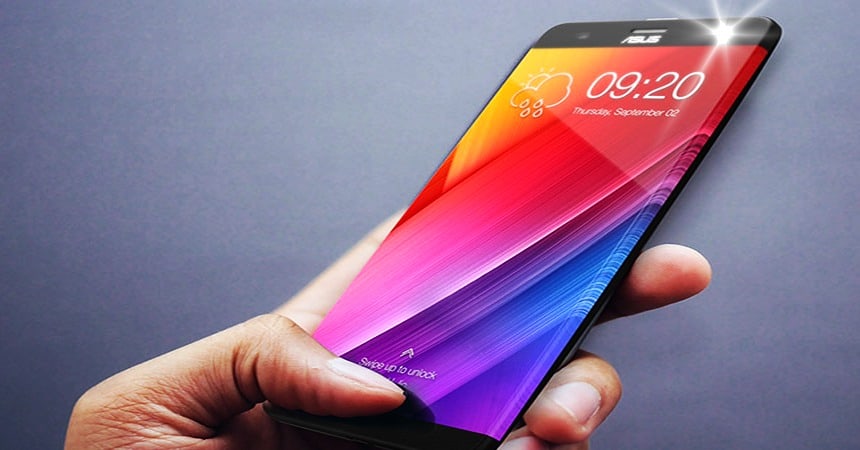
ASUS is one of the companies that have not yet taken the leap to an edge to edge screen. So artist Raj Rajpara took that initiative for them, and introduced a rendering of how gorgeous Asus Znefone Curve could look in the flesh.
Asus Zenfone Curve: a beautiful and sleek design
The designer opted for a screen size of 5.5 inches, which is the same as the Zenfone 4 Max Pro’s screen. Though the concept for the ASUS Zenfone Curve is bezel-less, increasing the screen to phone ratio, so the overall concept phone’s size would be smaller than the ASUS Zenfone 4 Max Pro. Mirroring the curved screen, the designer also added a curved back panel. This panel is not only aesthetic, as it includes a fingerprint scanner, wireless charging, and camera stabilizer technology.
Our first impression is that it is very beautiful. However the designer also adds some hypothetical specs to the mix, mentioning “Faster Performance, Smoother Display, Clearer Pictures”. In terms of performance, the designer added notes about having a “2.3 GHz Octa core processor”, different from the Qualcomm MSM8937 Snapdragon 430 Octa-core 1.4 GHz Cortex-A53 processor the Zenfone 4 Max Pro currently sports. This would make for a pretty powerful device, great for complicated tasks. It would probably have at least 3GB of RAM.
Another design element are the cameras, as the designer advertises their concept with “Clearer Pictures”. In the renders, you can see a powerful-looking front camera. It would probably be at least 16MP with LED flash (if not more). There is also a feature for a front camera, . Selfie game should also be at least 16MP to match, the latest ASUS Zenfone 4 Max Pro. The Curve also has a really thin design, so it’s mysterious how the designer intended to fit a battery as powerful as the 5000mAh in the Zenfone 4 Max Pro.
Great concept, but feasible?
All in all the concept is beautiful, sleek, and even includes some specs consideration. However, with the inclusion of an edgeless display, you could expect this kind of design to cost upwards of $800. This price is in par with other edgeless display designs such as the recent Samsung Galaxy Note 8. It’s also worth asking if this costly design feature would actually be practical or worth the added cost. Either way, this concept design is beautiful, and we’re impressed by the designer’s ideas!
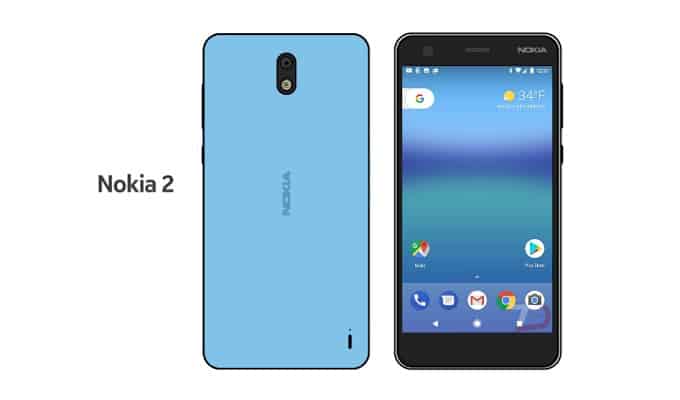
Nokia 2 vs Nokia 3 are both competent budget smartphones by the legend. Nokia is relying on the quality of the overall experience of either to entertain users: let’s compare the two!
Nokia 2 vs Nokia 3: specs comparison
In terms of design, both Nokia 2 and Nokia 3 smartphones come with a polycarbonate boder and a carved aluminium outer frame. Both of their screens have Corning Gorilla Glass 3 protection. The Nokia 3 features a more angular design. Both of the screens are identical in sizes: 5.0 inches. The display comes with a resolution of 720 by 1280 pixels and around 294 ppi density. Regarding the cameras, they both have 8MP main cameras, but for the selfie on Nokia 2 is at only 5MP. Meanwhile, Nokia 3 has 8MP front shooter.
In terms of specs, Nokia 3 is slightly better than the Nokia 2. The Nokia 3 sports 2GB of RAM with 16GB expandable to 256GB internal memory. Meanwhile, its rival, the Nokia 2 only comes with 1GB of RAM and 8GB ROM, expandable to 128GB. The Nokia 2 is powered by Mediatek MT6737 processor, while the Nokia 3 sports a stronger process, called Qualcomm Snapdragon 212. Despite being a bit behind when it comes to processor, Nokia 2 has a better battery: a huge 4100 mAh cell compared to the 2630 mAh cell on Nokia 3. In terms of operating systems, both devices will run a version of Android Nougat, which is depicted as “safe, secure, and up to date”.
Nokia 2 VS Nokia 3: So what’s the final say?
Looking between the Nokia 2 and the Nokia 3, it’s hard to say for sure which of the two is the better device. Sure, the Nokia 2 has slightly lower specs, but it also has a better battery. On the other hand, the Nokia 3 does have a front camera and design that are significantly better. At the end of the day, you can compare yourself with the prices. Nokia 2 costs around Rs 7,500 (around $116), and the Nokia 3 costs Rs 9,499 (around $147).
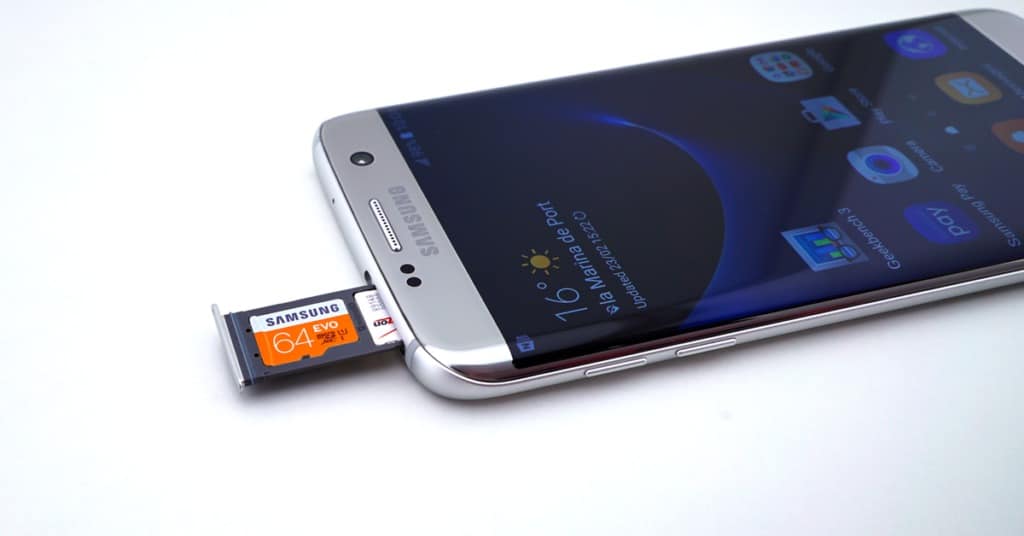
Nowadays Android phones often come with very little storage, a problem which is compounded by the operating system taking up some of that storage (around 6GB). Fortunately, most Android phones also come with expandable storage options in the form of a microSD card slot. Here we’ll show you 5 tips to maximise your phone storage with a microSD card.
1. Get a microSD card with the right size
In terms of capacity, two classifications can be used on Android devices: Secure Digital High Capacity (also known as SDHC), and Secure Digital eXtended Capacity (also known as SDXC). The first are microSD cards under 32GB, and the second are cards between 64GB and 128GB. To pick the size right for your phone you first need to find out what’s the maximum size your phone can handle (phones 5 years old or younger can usually use SDXC). You want to buy a capacity that is around two times more than you need, as a mostly empty card will run faster than a mostly filled one.
2. Make sure to pick a microSD card with the right speed
After picking a card size, you need to pick a speed: here, you can either choose the UHS-I or the Class 10. The UHS-1 is technically a faster standard than Class 10, but when tested the difference is trivial. If you’re just going to store media files, they are about equal in performance and either is good enough. If you plan on using the card to store apps or to take 4K footage, you can spend more money and get the Samsung EVO+ or Select, as it offers great performance per dollar (make sure your device runs Android 6.0 or newer).
3. Some suggestions for microSD cards
The Samsung EVO+ and Samsung EVO Select are both excellent microSD cards, but cost more than their competitors. Another similar microSD card is the SanDisk Extreme Pro. The SanDisk Plus microSD card is not as fast as the SanDisk Extreme Pro or the Samsung EVO+, but it is reliable and cheaper. Finally, the SanDisk Ultra 400GB is the largest capacity microSD card so far, but is also more costly and has a performance which is not as good as the SanDisk Extreme Pro.
4. Format and configure the microSD card
When inserting the microSD card into an Android device, the system automatically offers to format your storage. If not, go to Settings > Storage, and choose Format As Internal from the context menu. Then, to automatically move apps to the card, so if you want to make it the primary space for storing apps, you’ll need to go to Settings > Storage, and make the internal SD card the Default Write Disk. You can also choose to Migrate Data from the internal storage to the microSD card, which will make the operating system copy apps from the internal storage to the card.
5. Partition the microSD card by formatting it as both internal and external
It can be impossible to transfer data (like media files) to and from the card. If it’s not partitioned: separated into internal and external storage. Doing this also allows Android to encrypt parts of the card. However, this step is technologically oriented. It requires that you know how to connect to a phone using the Android Debug Bridge (which can be challenging). From there, you can choose to allocate different percentages of the card to internal and external storage. (for file hoarders, keep the card entirely as SDCard storage, for others we recommend 25% SDCard and 75% Internal).
More smartphone storage with the microSD card
There you have it, 5 tips to maximise your smartphone’s storage using a microSD card. Using a microSD card is an excellent way to expand your phone’s storage. But it can be unreliable at times. If the microSD card is corrupt, it can be difficult to recover lost files. This is why even if you use a microSD card to expand storage, always remember to backup your important files!
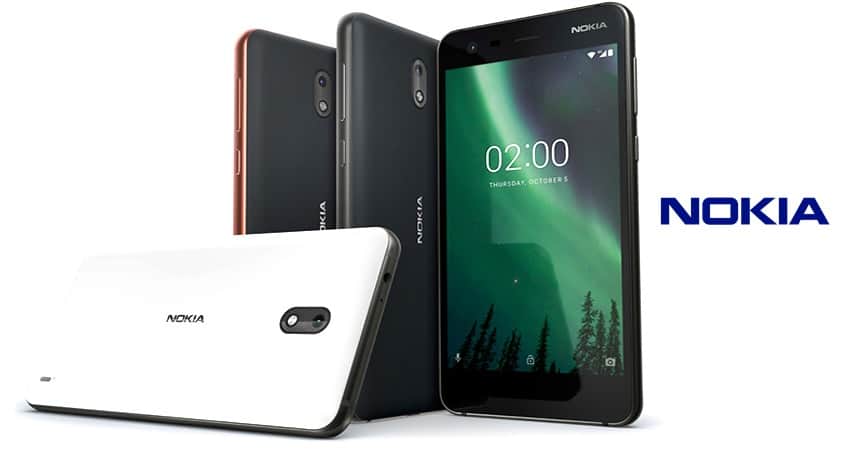
Nokia had their prime time gone for so long. This October, they promise a comeback to the smart phone market with their Nokia 2 official. The product is not only possessing the modern features of a smart phone but also some signature characteristics of Nokia products: affordable price and monster battery capacity.
Nokia 2 official: Good specs – Good price – Monster Battery Capacity
Nokia is hoping to get back to the smartphone market, where younger competitors like iPhone, Samsung or even HTC, Xiaomi and Huawei are leading ahead. This time, they made their Nokia 2 light, classic, easy to accept and good price. The screen size will be approximately 5 inches, which will definitely give comfortable and handy feelings for users. To make sure the light weight of the device, the adopted material is mainly plastic with aluminum frame and polycarbonate back cover. The Corning Gorilla Glass 3 is adopted to protect the light weight device so you do not have to worry too much in case of dropping.
The Nokia 2 official also comes with decent camera package: it sports an 8 MP primary camera with autofocus and LED flash; secondary camera of 5 MP. You can store your pictures and data efficiently with the internal storage of up to 8GB and expandable microSD slot. The phone will have Android 7.1.1 (Nougat) pre-installed and it is planned to be upgraded to Android 8.0 (Oreo). Finally, we cannot neglect the most noticeable feature of Nokia family: the battery capacity. Nowadays, smartphones are equipped with 3,000 mAH battery for daily charge.
Nokia 2 is provided with a 4100 mAH with up to 1340 hours of standby time (including 3G). It can also assure a talk time of 19 hours and 139 hours of music play. Besides, the price is also really affordable, aiming at low to the medium user class. Hope that Nokia can make their remarks in the market with this strategic product.
Nokia 2 official: release date and price
The Nokia 2 has not yet been available. The device will come with 3 colors: Pewter/Black, Pewter/White and Copper/Black. We expect Nokia 2 price will be around 140 dollars. Not a very huge money for such a big name, don’t you think?
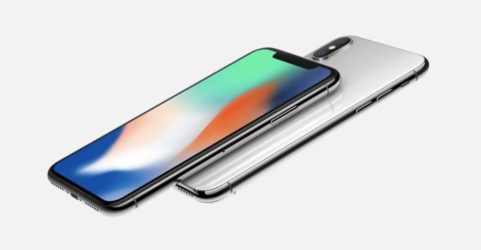
After the release of the same iPhone design, the new iPhone is here for the 10th anniversary Apple. It is not iPhone 9; it is called iPhone X. What makes it different from other iPhones? Check out in our iPhone X opinion.
iPhone X opinion: Face ID, OLED display, Portrait Mode
The latest iPhone comes with the significant starting price tag of any iPhone ever product. It has some new features. However, the previous iPhone (iPhone 8 Plus) which launched this September has similar specs as the iPhone X. Which device is better suited for you? For the iPhone X specs, it has wider and fuller screen with 5.8 inch OLED edge-to-edge display used for the first time (2346 x 1125 pixel resolution). It is smaller than the iPhone 8 Plus.
For the hardware, The iPhone X and the iPhone 8 Plus retain the A11 Bionic chip from the iPhone 8. They have six cores and better performance than the A10 Fusion chip. Let’s talk about the battery. The iPhone X uses a 2716 mAH, but the iPhone 8 Plus uses a 2691 mAH capacity battery.
The iPhone X’s front camera is excellent at sensing your surroundings and your face. The telephoto portrait lens on the dual camera (f/2.4) has a better aperture than the iPhone 8 Plus (f/2.8). If you like selfies, we think the iPhone X is the perfect choice for you. The impressive spec of the Apple iPhone X is the Face ID. According to Apple, you can unlock your phone with your face. However, we think the touch ID extremely fast and convenient. You do not have to be looking at your phone to unlock it every single time. The Face ID seems a little bit slow because you have to be looking directly at the iPhone to open.
iPhone X release date and price
The iPhone X is available now. It starts at $999 ~ Rs. 64,567 for 64GB and $1149 ~ Rs. 74,262 for 256GB. We can see with a price like this; the iPhone X costs as much as a Macbook. Meanwhile, the iPhone 8 Plus is $200 ~ Rs. 12,926 cheaper for the 64GB version. Besides that, you can upgrade the storage to 256GB on it. What do you think about our article? Share opinion with us.
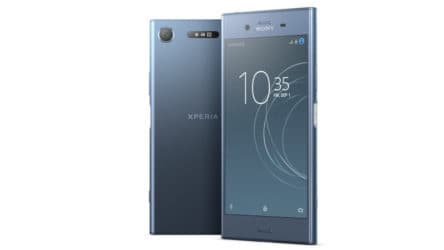
Sony introduces another flagship smartphone that has impressive internals and cameras in the end of 2017. The Sony Xperia XZ1 sports 4GB RAM, 19MP Motion Eye Camera and so much more… Let’s have a look at this article for more details!
Sony Xperia XZ1: Classic design, modern specs
After the success of the previous Xperia XZ, Sony introduces the new flagship smartphone of this line at the IFA 2017 in Berlin – the Xperia XZ1. Firstly, let’s talk about the design. Sony stays with their traditional design for the Xperia XZ1, which Sony Xperia fans know over the years. The XZ1 has a bold and rectangular shape. For Sony Xperia Xz1 specs, the phone comes with a 5.2 inch full Hd display. It is smaller than its XZ Premium brother with 5,7″.
However, the Sony Xperia XZ1 has a good size, that is manageable one-handed. Additionally, this new sony phone runs on the Qualcomm Snapdragon 835 with 4GB RAM and 32GB or 64GB of storage. The Sony XZ1 works on the latest Android; it is Android 8.0 Oreo. Besides that, there is also microSD support for further storage expansion up to 256GB.
For the photography, this Sony smartphone XZ1 has a 19MP Motion Eye Camera on the rear. That allows for 960fps video rather than the most smartphones. On the front of the Xperia XZ1 is a 13MP selfie snapper which helps the display as a flash to brighten up when the lights are low. The Sony Xperia XZ1’s battery is reduced in size from the one in the Xperia XZ. The Sony Xperia XZ1 brings 3D scanning technology to a smartphone for the first time.
Sony Xperia XZ1 release date and price
The Sony Xperia XZ1 is available now. The Sony Xperia XZ1 price starts around $770 ~ Rs.49736. What do you think about the brand new Sony Xperia XZ1? Share opinion with us right today!
The 16MP camera battle today is between an upcoming selfie expert, OPPO F5 and its rival camera monster from Korea, LG G5. Check out the winner below!
Oppo F5 vs LG G5 specs: 16MP Dual camera, 6GB RAM
LG G5 specs reveal an 5.3-inch display at 16:9 aspect ratio, along with the screen resolutions of 1440 x 2560 pixels. However, OPPO F5 seems to beat LG today with its 6-inch display up to 18:9 aspect ratio and the screen resolutions of 1080 x 2160 pixels. When we find LG G5’s Qualcomm quad-core Snapdragon 820 powerful, the Mediatek octa-core Helio P23 from OPPO F5 just works it better.
LG G5 offers 4GB RAM and 32GB ROM. The users also have more than one option from OPPO F5, including 64GB ROM for 6GB RAM and 32GB ROM for 4GB RAM to be our chipset winner today. OPPO F5 back camera stands at 16MP, while G5 has its dual rear camera of 16MP+8MP, and the specs also higher for G5 in video recordings. Nevertheless, LG G5 selfie camera of 8MP finds it impossible to win the F5 selfie expert with the front camera up to 20MP.
The 2800mAh battery of LG is removable, while this is impossible for OPPO F5. However, the battery capacity of OPPO F5 receives an upgrade up to 3200mAh. Other OPPO F5 specs include the operating system of Android Nougat 7.1. LG G5 is also upgradable to Android Nougat 7.0 at most. In a nutshell, as OPPO F5 release date is later than G5 more than one year, F5’s most specs are further improved. However, we highly evaluate the rear camera of G5 for higher quality video recording.
Oppo F5 vs. LG G5 price and release date
LG G5 release date is from April 2016 along with price up to $ 524 ~ Rs 33,842. You can also wait for the OPPO F5 this November. Since OPPO F5 price begins at $ 372 ~ Rs 24,025, more budget-friendly. Which one do you prefer, let us know!
Brace yourself, the next smartphone battle is finally here! Today, let’s compare the powerful Nokia Edge 2017 and mighty Oppo R9S Plus. 4000mAh, 23MP… who will get our vote? Check it out!
Nokia Edge vs. Oppo R9s Plus: 6GB RAM, 23MP Camera
The Nokia Edge 2017 mobile is one of the best Nokia and Android smartphones fans would like to see. While Oppo R9S is considered as Oppo expert camera phone! Firstly, let us share with you more about their display. Individually, theNokia Edge 2017 specs come with a 5.5-inch screen, 1080 x 1920 pixels resolution. Meanwhile,Oppo R9s Plus specs include the bigger display of 6.0 inches AMOLED Full HD touchscreen (1080 x 1920 pixels resolution).
In term of the hardware, Nokia Edge 2017 runs on an Octa Core 2.3 GHz Qualcomm Snapdragon 652 and has a 6GB RAM. Oppo R9s Plus gets power from Snapdragon 653 chipset and Octa-core 4×1.95 GHz processor and also sports a 6GB RAM. It seems like both smartphones are in a tight competition at this point. The Nokia Edge provides a more extensive internal storage: 128GB and an expandable MicroSD up to 256GB. While Oppo R9s Plus comes with a much bigger internal storage of 64GB, expandable up to 256GB with a micro SD card.
Additionally, Nokia Edge flagship comes with a Li-Ion 3000mAh battery. Oppo R9s Plus wins this round with its massive 4,000mAh battery. Finally, for photography, Oppo R9s Plus camera brings in a 16MP camera on the rear along with a 16MP snapper on the board of the phone. Despite this, Nokia Edge 2017 gets our point with their 23MP rear camera and an 8MP front-facing selfie shooter.
Nokia Edge vs. Oppo R9s Plus release date and price
Oppo R9s Plus release date sets around December 2017. Moreover, Nokia Edge 2017 release date should be around mid-March, 2018. How much do you need to save? Oppo R9S Plus price starts at $ 622 ~ Rs 40,171. And Nokia Edge 2017 price is at around $ 650 ~ Rs.42,000. For similar price with better cameras and RAM, Nokia gets our vote for this round. How about you?
Xiaomi introduces their next two smartphones to their Redmi series this November – Xiaomi Redmi Y1 and Redmi Y1 Lite. 3GB RAM, 16 MP camera and an affordable price, you need to check them out!
Xiaomi Redmi Y1 and Xiaomi Redmi Y1 Lite specs
While these phones are a part of Xiaomi new series, we can see lots of similarity between this and Xiaomi previous flagships. Xiaomi Redmi Y1 and Xiaomi Redmi Y1 Lite are the global versions of the Redmi Note 5A Prime and the Redmi Note 5A. Xiaomi Redmi Y1 specs come with a 5.5-inch LCD screen with Full HD resolution. It runs on a Snapdragon 435 chipset with an octa-core 1.4 GHz Cortex-A53. Xiaomi Redmi Y1 Lite specs include a Qualcomm MSM8917 Snapdragon 425 chipset and Quad-core Cortex-A53.
In term of memory, there are two options for Xiaomi Redmi Y1: 3 GB RAM + 32 GB storage or 4 GB RAM + 64 GB storage. For Redmi Y1 Lite, the phone comes in only one configuration with 2GB RAM and 16GB internal storage. Xiaomi Redmi Y1 and Xiaomi Redmi Y1 Lite both have the same battery capacity of 3080 mAh battery. Quite a large memory and battery capacity for such a price.
Xiaomi Redmi Y1 features a 16 MP front camera with f/2.0 aperture and 76-degree lens. In addition, the camera on the back also has a lower-resolution 13 MP sensor. On the other hand, Redmi Y1 Lite selfie camera has a 5 MP sensor while the rear camera is 13MP.
Xiaomi Redmi Y1 and Redmi Y1 Lite release date and prices
Xiaomi Redmi Y1 price is $140 ~ Rs. 8,999 for the variant with 32GB storage and 3GB RAM. Moreover, there is another variant of the phone, with 4GB RAM and 64GB storage. This version price starts at $170 ~ Rs. 10,999. As for the Redmi Y1 Lite price, the phone comes in only one configuration with 2GB RAM and 16GB internal storage and is priced at Rs. 6,999. Xiaomi Redmi Y1 and Redmi Y1 Lite release this week in India.
Asus Pegasus 4S is the first full-screen smartphone of the brand. This Galaxy S8 lookalike receives many positive reactions from the community with top-notch specs including 3GB RAM and dual cameras of 16MP and 8MP. Read the full article for more details!
Asus Pegasus 4S for November: Snapdragon 435, dual camera 16MP+8MP
According to our source, Asus Pegasus 4S specs come with a 5.7-inch IPS LCD screen with HD+ resolutions (~ 1920×1080 pixels). The display is enhanced by the Corning Gorilla Glass 2.5D glass along with its first full-screen display of 18:9 aspect ratio. Additionally, Pegasus 4S also features a bezel-less screen and houses the fingerprint reader on the back. Other Asus Pegasus 4s specs include its MediaTek MT6750T octa-core, which support the hardware to overclock at 1.4GHz.
The internal storage options depend on the RAM options users choose to spend on. Asus Pegasus 4s come with two options: 3GB RAM plus 32GB of internal storage, or a 4GB RAM version plus 64GB internal storage. Expandable SD card is also available. For the photography, Pegasus 4S is a full-equipped monster with its dual camera system. It has one dual camera on the back of 16MP and 8MP, and another 8MP camera on the front for all the selfie lovers.
To maximise photography experience, other professional features released in this device are LED Flash, AutoFocus, Full HD (1080p) video recorder. The Pegasus 4S runs on Android OS for sure, which is expected to be the latest Android 7.11 Nougat. Other nice features should include a non-removable 4,030 mAh battery and G LTE network for high connectivity.
Asus Pegasus 4S release date and price
The company does not utter a single word on Asus Pegasus 4S price and availability until now, though the price falls not under $435 (~ Rs. 28087). What do you think?
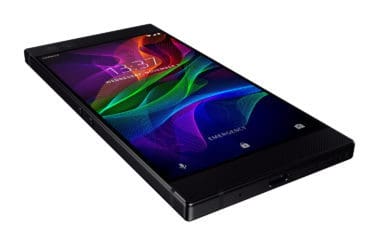
Recently, HTC U11 Plus and Razer Phone strongly impress our users with their spectacular specs: 6.0 inches screen, 1440 x 2880 pixels . Let figure out who is the winner in this battle today.
Razer Phone vs. HTC U11+: 6.0 inches screen, 1440 x 2880 pixels
Razer Phone specs offers a 5.7 inches with 1440 x 2560 pixels of resolution, 16:9 ratio (~515 ppi density). On the other hand, HTC U11 plus provides a 6.0 inches display with the resolution of 1440 x 2880 pixels and 18:9 ratio (~538 ppi density). We can see that HTC U11 plus is better regarding the display. Moreover, Razer Phone flagship has a 8 GB RAM and an internal memory of 64 GB, (expandable via a microSD up to 256 GB). On the contrary, the HTC U11 Plus memory has two options: 128 GB, 6 GB RAM or 64 GB, 4 GB RAM and an expandable microSD up to 256 G
In terms of hardware, Razer handset runs on the powerful Qualcomm MSM8998 Snapdragon 835, Octa-core. For the OS, Razer Phone specs uses Android 7.1.1. Its rival, HTC U11 Plus operates on Android 8.0 (Oreo) and Chipset Qualcomm MSM8998 Snapdragon 835. HTC flagship gets a better updated OS than Razer handset. When it comes to the battery box, HTC U11 plus offers a Non-removable Li-Ion 3930 mAh battery. On the contrary, Razer Phone owns a Non-removable Li-Ion 4000 mAh battery. Regarding battery, Razer Phone is a bit better than HTC U11 plus.
Speaking of photography aspect, Razer mobile phone consists of Dual 12 MP rear camera, f/2.4 and a front camera with an 8MP snapper. On the other side, HTC U11 plus camera is 12 MP, f/1.7, the front camera is an 8MP sensor. When putting these two flagships on the scale regarding camera, there is no significant difference.
HTC U11 plus and Razer Phone release date and price
Razer handset is available now while HTC U11 plus release date is still unclear. HTC U11 plus price at launch is approximately $ 900(~Rs 58,000). On the other hand, Razer Phone Price is around $ 700(~Rs.45,000). You can consider HTC U11 plus specs since this flagship is better than its rivals in display and internal storage.


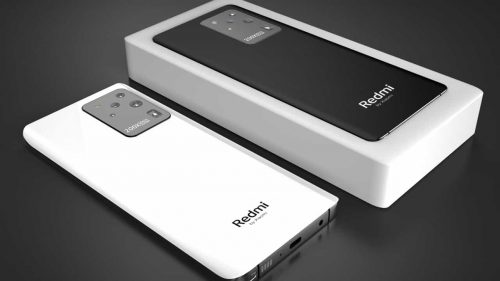
 Sony Xperia Ultra Max Pro Specs: 200MP Cameras, 19100mAh Battery!

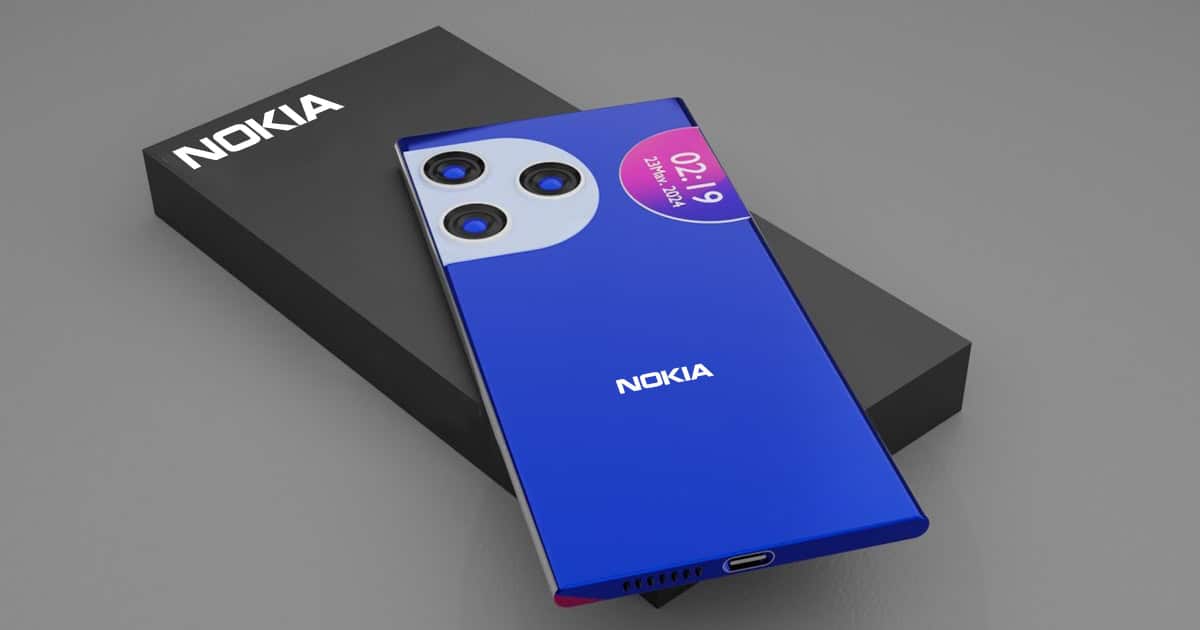
 Nokia Titan 2026 Specs: 16GB RAM, 9700mAh Battery!