Author: Chris Eilers
Samsung steals idea from Motorola for their Galaxy Note 7?
At Galaxy Note 7 release date, the Korean company is suggested to steal the idea from Motorola for this Note. So, is it true that Samsung steals the cool feature from Motorola phones?
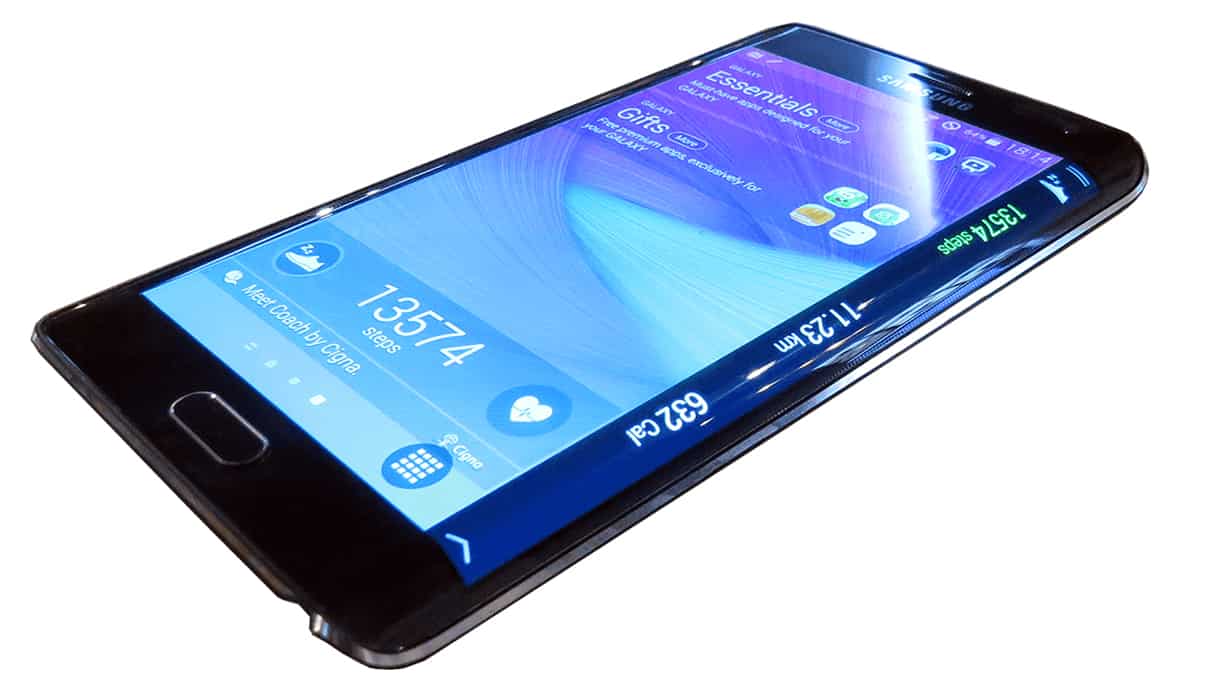
Samsung steals Always On display of Note 7 from Motorola?
Galaxy Note 7 – a dreamer’s device – has just created a fever in the last couple weeks. With stunning dual-curved screen design and powerful specs, this phone is one of a kind. Not even mention that this new Samsung flagship has some unique and cool features. Iris scanner, dust+water proof, and Always On display are some examples. Everyone is so excited for the day this handset is available in the market. Galaxy Note 7 release date was on 19th August.
However, it seems like that the release date of this Note is not so smooth. Right before Galaxy Note 7 was released, Motorola had said that Samsung steals their idea. This brand posted on the Twitter with the hashtag of #TheOriginalAlwaysOnDisplay and #motozdroid. The company claimed that the Korean giant stole the cool feature-Always On display from them. Along with the status is a picture of their Moto Z.
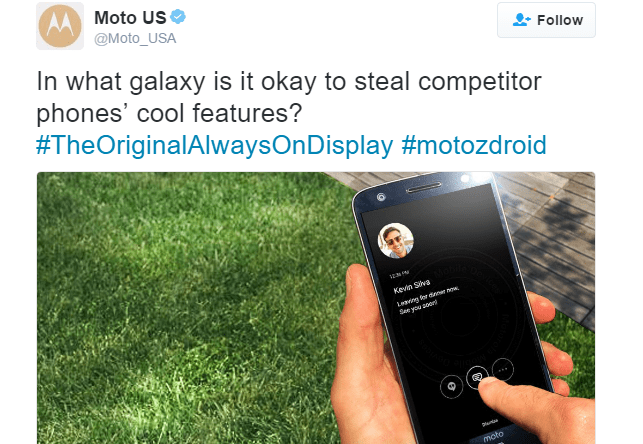
This is kinda weird. Because Note 7 is not the first Samsung device to sport this feature. Always On display used to be equipped on the couple Galaxy S7 and S7 Edge. However, this feature is not stand out on these two handsets. It’s not until Note was “born” that this cool feature is hugely improved.
Always On display is not originally from Motorola
And if you don’t remember, we’ll remind you. Always On display is not the original feature from Motorola. This kind of feature used to be seen on Nokia handset- MeeGo-based N9 or Nokia N8. After that, the feature was developed with the name of Glance Screen. Motorola is just the first brand to released an Android phone having Always On display, or Active Display. So, it’s not true to say that Samsung steals Always On display from Motorola.
You May Like
-
 Sony Xperia Ultra Max Pro Specs: 200MP Cameras, 19100mAh Battery!
-

-
Nokia Joker 2026 Specs: 200MP Cameras, 9800mAh Battery!
-
Nokia Horizon 2026 Specs: 200MP Cameras, 12800mAh Battery!
-
 Nokia Titan 2026 Specs: 16GB RAM, 9700mAh Battery!
-
Redmi Note 15 Series Goes Global With 200MP Cameras, 6580mAh Battery, Price!
Lumia 950 XL iris scanner vs Galaxy Note 7
Iris Scanner is one of the interesting features on Galaxy Note 7. But do you know Lumia 950 XL is the first device has this feature? So, let’s find the winner in Lumia 950 XL iris scanner vs Note 7 iris scanner!
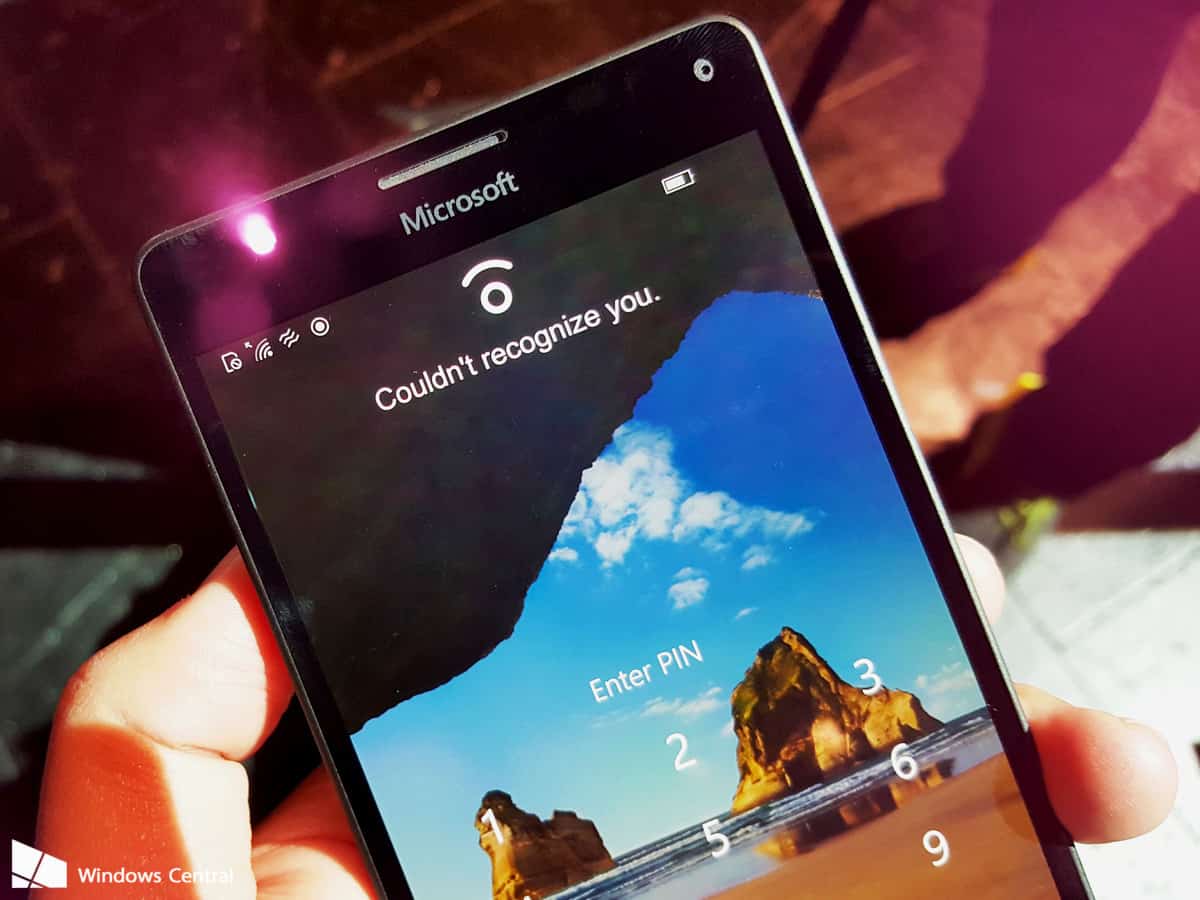
1. Note 7 is more sensible, but the Lumia is more secure
In terms of security, both phones request to created a PIN code. This code helps to increase the security. Samsung Galaxy Note 7 has a higher speed when access to your phone via iris scanner. On Galaxy S7, you need only 2 seconds to complete scanning iris while that take 6-7 seconds on Lumia 950XL. However, the Lumia 950 XL iris scanner bring the safer feeling.
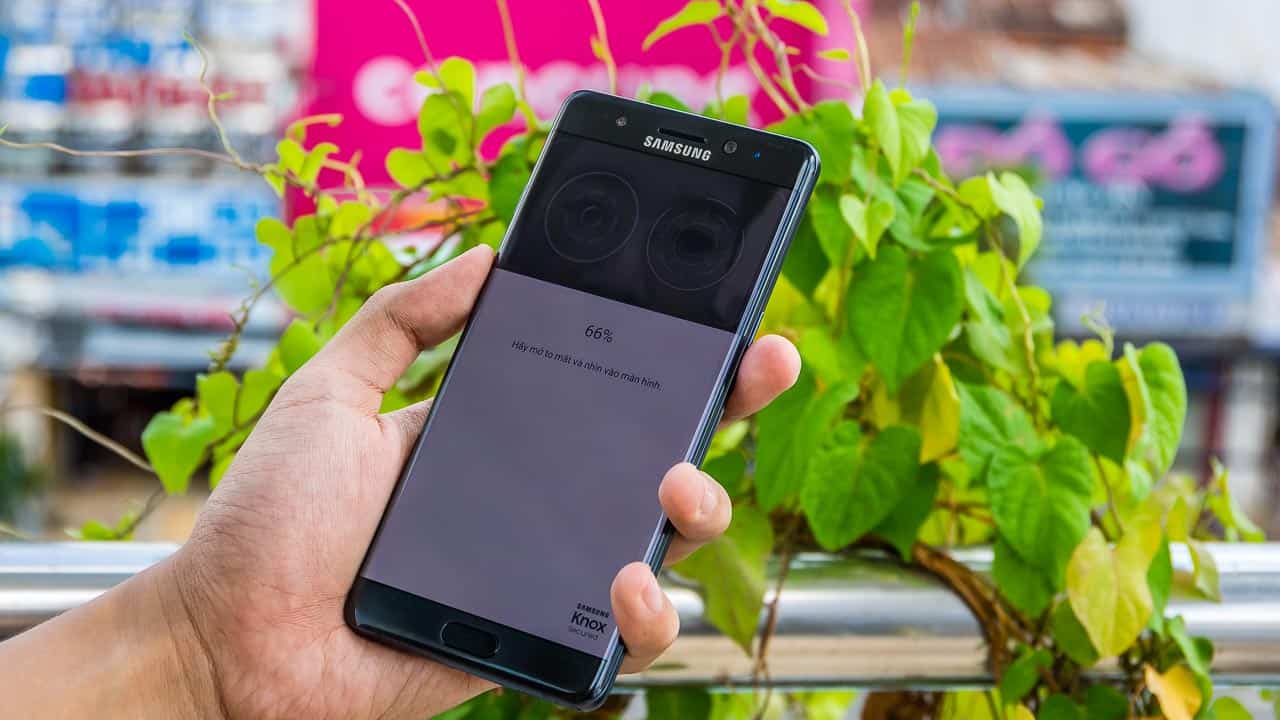
2. In moderate light condition
In the normal condition, Galaxy Note 7 is faster but Lumia 950 XL gets some better features. The Lumia 950 XL iris scanner can recognise the owners even when he or she wears glasses, which Galaxy Note 7 can’t. So, that seems Lumia 950XL has more experience than its counterpart. Thus, despite taking more time in scanning iris, Lumia 950 make you feel safer.
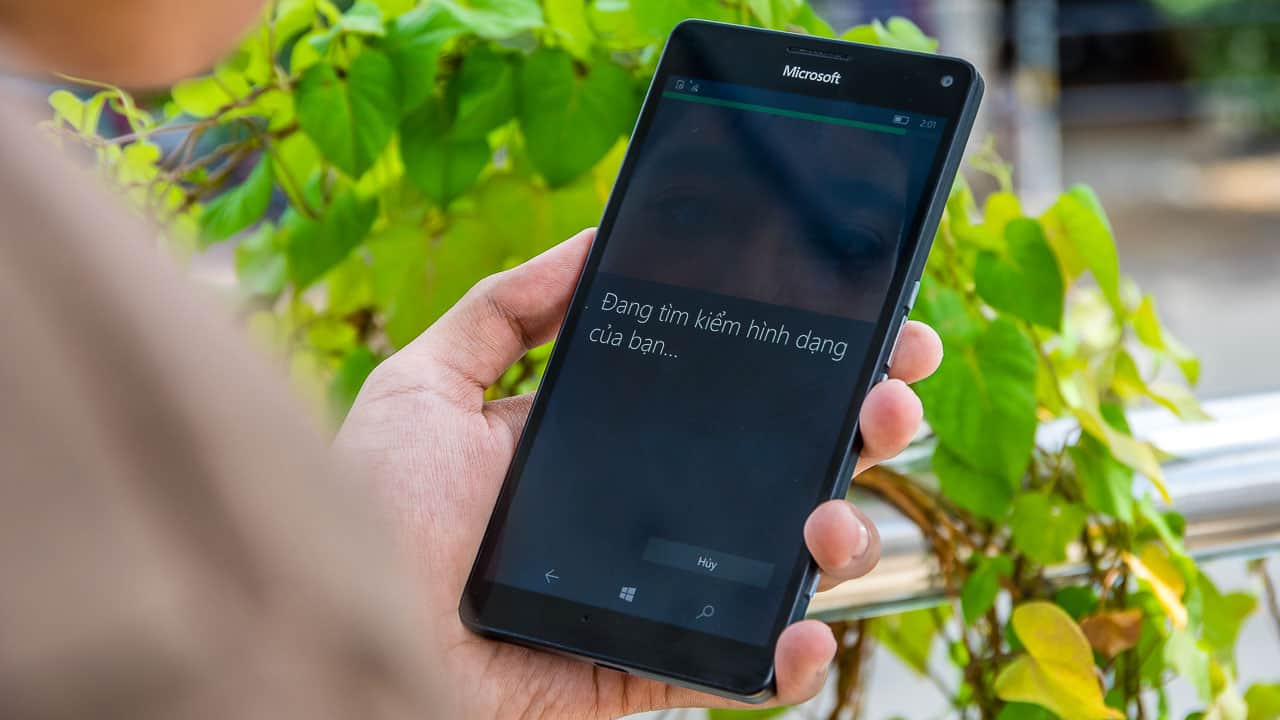
3. In low light condition
Both Lumi 950 XL and Galaxy Note 7 are supported by a laser scanner. So, they all work well in the low light condition without any problem. In this condition, Galaxy Note 7 takes 2 seconds to record iris while Lumia 950 iris scanner takes 5 seconds to complete the processing. Surprisingly, when you wear glasses in this condition, Galaxy Note 7 recognises the iris quicker than its rival!
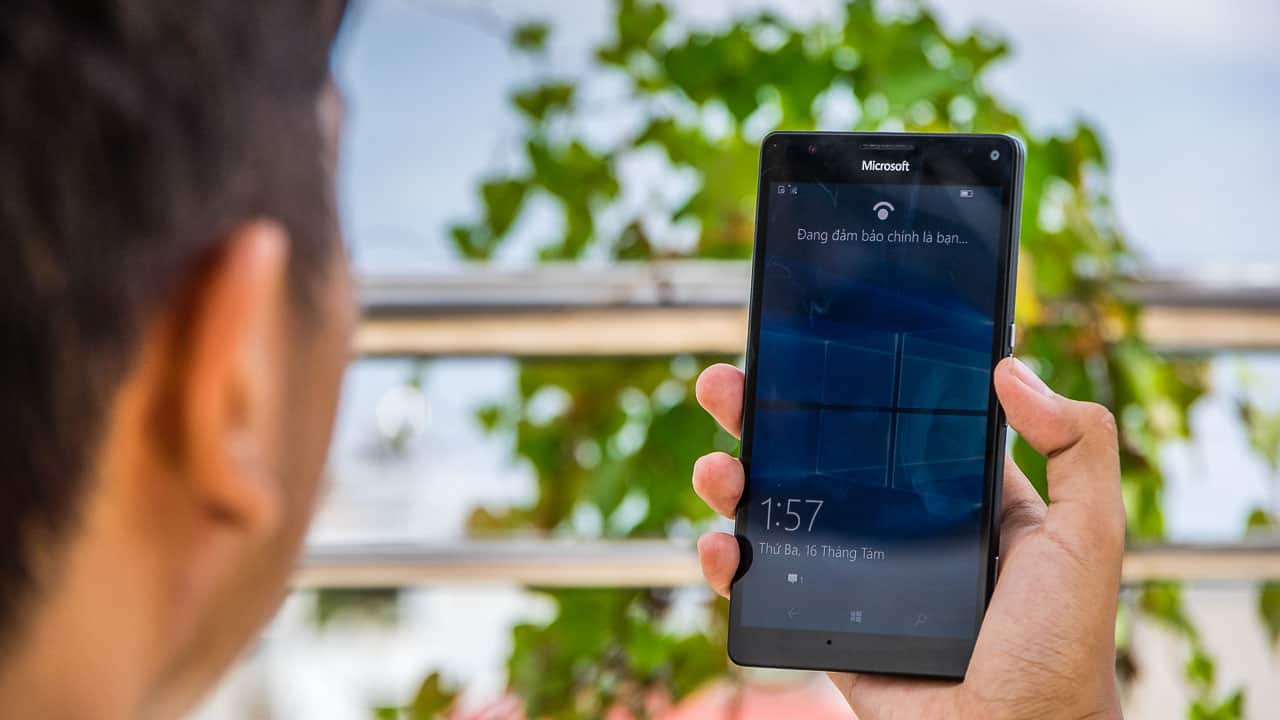
4. In the strong light condition
The strong light condition is not supportive for iris scanner. So, in this condition, both devices get difficult to scanning iris. The time of processing iris is the same for both Lumia 950XL and Galaxy Note7. Specifically, Galaxy Note 7 takes 4-5s while the Lumia 950 XL iris scanner needs 5-6s to complete its scanning. Despite taking more time than the normal condition, both phones complete their work without any mistake.
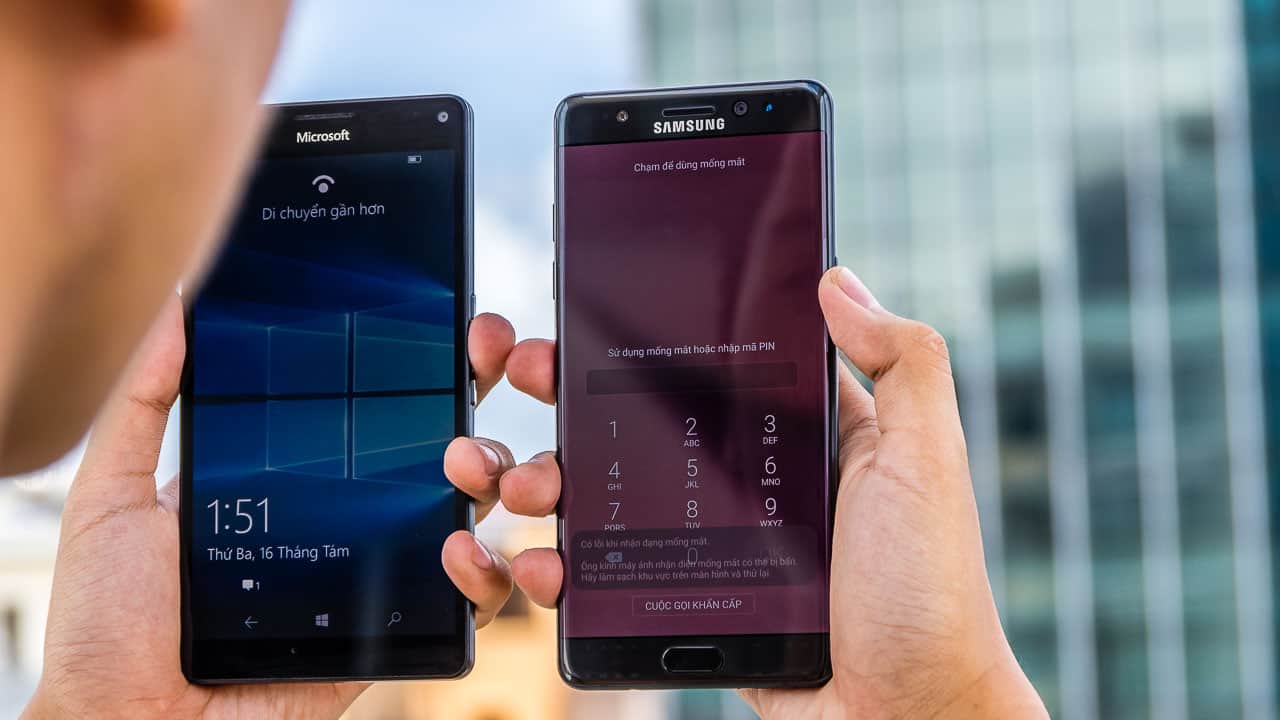
5. The customization
Lumia 950 XL iris scanner is a bit better than Galaxy 950 in term of customization. This phone views more greeting than Galaxy Note 7, as ” Hello”, ” We has recognised you”, or ” Well come to Lumia 950 XL, dear”,…Thus, people think they are taken care up kindly. But in Lumia 950 XL iris scanner, you can’t determine the scanning area . So it’s hard to adjust your phone when scanning by iris scanning.
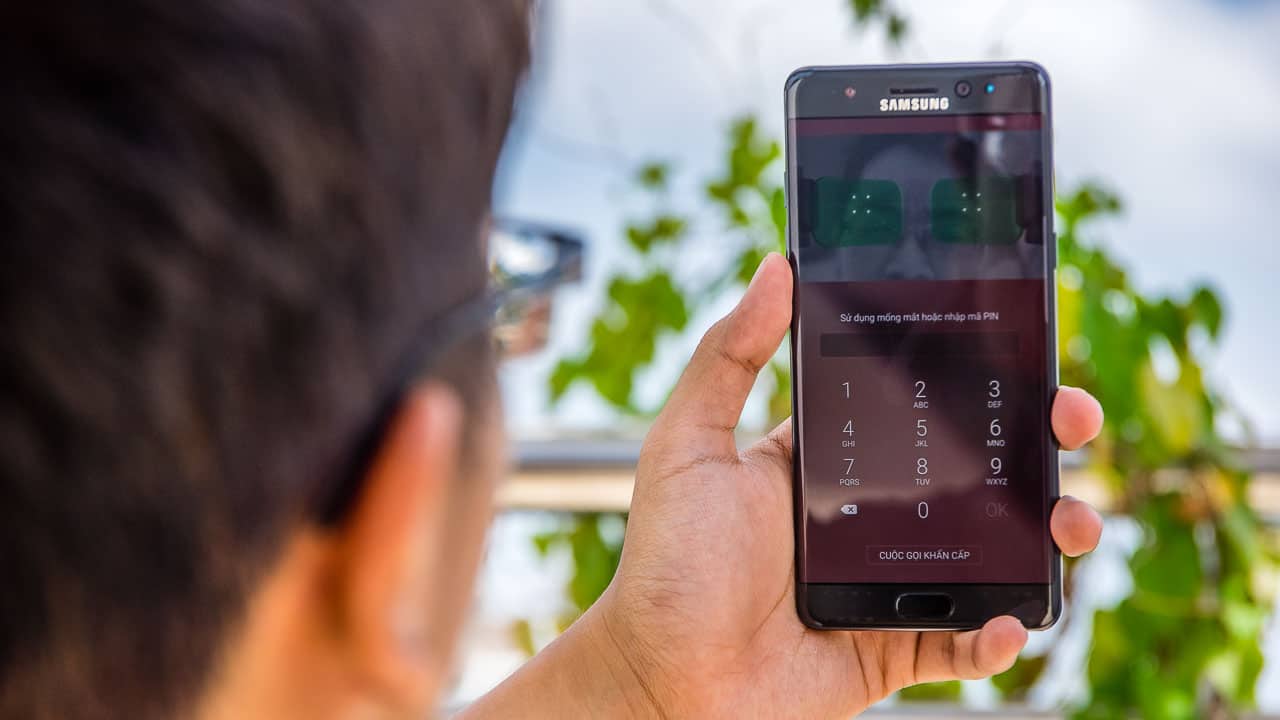
6. The extendable function
Talking about Galaxy Note 7 iris scanner, this function is not only used for unlocking the smartphone. It can also lock library and keep your internet accounts safe like fingerprinter scanner. Moreover, iris scanner is also used in Samsung Pass app. Thanks to scanning iris, this app enables to transfer money, access banking account and Samsung Pay quickly.
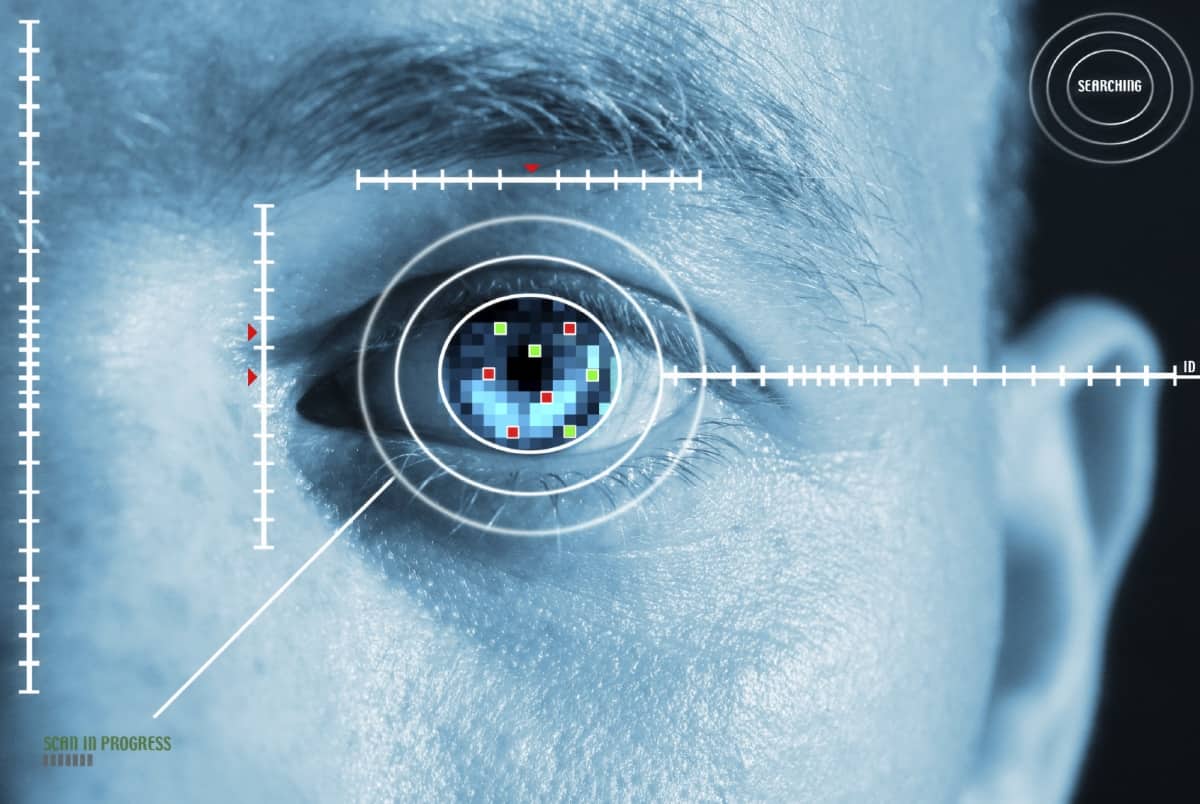
Lumia 950 XL iris scanner vs Note iris scanner
Actually, iris scanner is one of the interesting and professional features on the smartphone. However, sometimes they can’t work smoothly and even course annoying. So, if we have to pick the winner between Note 7 and Lumia 950XL iris scanner, we choose none of them! What about you?
You May Like
-
Sony Xperia Ultra Max Pro Specs: 200MP Cameras, 19100mAh Battery!
-
-
Nokia Joker 2026 Specs: 200MP Cameras, 9800mAh Battery!
-
Nokia Horizon 2026 Specs: 200MP Cameras, 12800mAh Battery!
-
Nokia Titan 2026 Specs: 16GB RAM, 9700mAh Battery!
-
Redmi Note 15 Series Goes Global With 200MP Cameras, 6580mAh Battery, Price!
Snapdragon 820 vs Exynos 8890: Which one is better for Note7?
We all know that Samsung Galaxy Note 7 comes with two variants: Snapdragon 820 vs Exynos 8890 chipsets. In case you wonder which one is more powerful, take a look at this article!

Snapdragon 820 vs Exynos 8890 chipsets: Benchmark comparison
To compare their strengths, there’s no method better than mentioning the benchmark scores of Snapdragon 820 vs Exynos 8890. First of all, we will talk about the Antutu benchmark and Vellamo Metal benchmark, which focus more on the performance. We can see a huge difference between the score of Snapdragon 820 and of Exynos 8890. The Qualcomm’s chipset totally overshadows the Samsung chipset.
However, when it comes to Vellamo Browser and JetStream benchmarks, it’s the Exynos version that stands out! This means Note 7 with Exynos 8890 chipset performs better when surfing the websites and social networking. It is because Exynos 8890 supports an octa-core processor, while SND 820 is paired with a quad-core processor. Then we have tried GFXBench Manhattan – a graphics-intensive test. The result comes our surprisingly as the score SND 820, which partners with Andreno 530 GPU, gets is almost twice higher than the Exynos chipset, which goes side by side with Mali-T880 GPU.

To continue, we have tried Basemark OS II benchmark. This benchmark evaluates the overall performance. In this test, both Snapdragon 820 vs Exynos 8890 are equal, though the Samsung chipset is slightly better. Then finally we have run those variants through the Geekbench 3, which judges both the single-core performance and multi-core performance. In the single-core test, both of them arrives with similar results. But in the multi-core test, Exynos wins with 1200 points higher thanks to its octa-core construction.
Snapdragon 820 vs Exynos 8890 chipsets: Which one is the better choice?
Before we jump to the conclusion, we need to say that both Snapdragon 820 vs Exynos 8890 are among the best chipsets in the world. No matter what Note 7 version you choose, you will be offered with a great experience. Now when we go into details, the Snapdragon 820 version supports smoother graphics, hence better images. So users who love taking photos and watching videos, this Note 7 version is the better choice. On the other hand, the Exynos chipset is more ideal for those who tend to conduct lots of tasks at the same time. So which one is your pick guys?
You May Like
-
Sony Xperia Ultra Max Pro Specs: 200MP Cameras, 19100mAh Battery!
-
-
Nokia Joker 2026 Specs: 200MP Cameras, 9800mAh Battery!
-
Nokia Horizon 2026 Specs: 200MP Cameras, 12800mAh Battery!
-
Nokia Titan 2026 Specs: 16GB RAM, 9700mAh Battery!
-
Redmi Note 15 Series Goes Global With 200MP Cameras, 6580mAh Battery, Price!
Smartphone display: all the types you need to know
In one of our previous article, we’ve discussed and explained about definition and resolution of smartphones. Today, let’s take a look at the smartphone display types!

Smartphone display types: LCD
There are many types of display, so let’s start with LCD, stands for Liquid Crystal Display. It consists of liquid crystals that get illuminated by a back-light. It doesn’t require much energy to power a screen, and perform very well under sunlight, has higher brightness level, lasts longer than other smartphone display types, but at the expense of less contrast. There are two main types of LCD: TFT and IPS. We will take a closer look at each of them below.
TFT stands for Thin Film Transistor, an advanced version of traditional LCD. It has relatively low production cost and increased contrast; however it consumes more energy and has less impressive viewing angles and color reproduction. On the other hand, IPS (In-Plane Switching) has higher production cost. It is so because it is a further improvement of TFT. Specifically, it has improved viewing angles, color reproduction, and better energy consumption. These smartphone display types of LCD are very popular for smartphone manufacturers because of the cost.

Smartphone display types: AMOLED and Super AMOLED
One of the smartphone display types, AMOLED stands for Active Matrix Organic Light-Emitting Diode. It sounds complicated, but you only need to know that it’s another thin-film display technology. AMOLED screens consume less energy when displaying dark colors. However, it will consume more energy for light colors. The contrast is better for AMOLED screens, but they perform not as good under sunlight as LCD. AMOLED also has higher production cost than LCD too, but they can be made thinner and more flexible than LCD (curve screens).
Super AMOLED is an improved version of the basic AMOLED, which handles sunlight better, and consume less energy. This is a marketing term for smartphone display types first used by Samsung. But it is not marketing bluff: Samsung has consistently been voted as the best smartphone displays around.
Smartphone display types: Retina
This is another marketing term for smartphone display types, this time coming from Apple. Retina is not defined by any characteristics; rather it is of sufficient resolution that the human eyes can’t discern pixels at a normal viewing distance. Measurement differs based on screen size: Phone 4, which was the phone Apple first used this term on, and popularized it, had a 960 x 640 pixel resolution on a 3.5″ IPS LCD screen, o 330 pixels per square inch (ppi). The iPhone 6 Plus, Apple’s first big screen, has Full HD resolution, so its 5.5″ screen has pixel density of 401 ppi.

Smartphone display types: Which one is better?
One thing to note: Super AMOLED is not restricted only to Samsung, and Retina is not restricted to only Apple (though you’re more likely to hear only those 2 use those terms). Like wise, not all of Samsung phones use AMOLED screens. All the numbers and technical data can be used to compare, but real-life performance is just as important. You need to experience the smartphone display types first hand, weigh the pros and cons, and choose the best one for you.
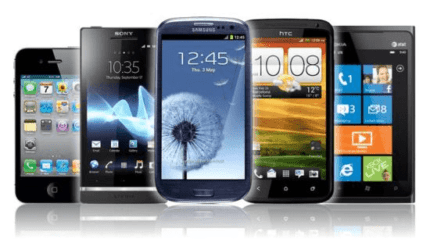
So now that you’ve learned more things about smartphone display types, which phone(s) do you think has the best screen(s)? Tell us!
You May Like
-
Sony Xperia Ultra Max Pro Specs: 200MP Cameras, 19100mAh Battery!
-
-
Nokia Joker 2026 Specs: 200MP Cameras, 9800mAh Battery!
-
Nokia Horizon 2026 Specs: 200MP Cameras, 12800mAh Battery!
-
Nokia Titan 2026 Specs: 16GB RAM, 9700mAh Battery!
-
Redmi Note 15 Series Goes Global With 200MP Cameras, 6580mAh Battery, Price!
Fingerprint scanner and iris scanner: Which one is better for security?
Fingerprint scanner is currently very popular in the smartphone industry. Even many budget phones comes with this features. But the debut of iris scanner in Galaxy Note 7 has somehow hinted the end of the fingerprint era. In today’s article, we’ll show you which one is better for phone security.

The pros and cons of fingerprint scanner and iris scanner
First of all let’s talk about fingerprint scanner. This kind of scanning technology is considered a more efficient security method. It allows users to unlock the phone just by tapping their finger on the scanner, even when the phone is in the pocket. But this technology also has some drawbacks. Fingerprint is easy to copy. We leave our fingerprint on almost everything we touch. Moreover, there are many bad scanners (often in budget phones) that may encounter errors or fail to recognize the fingerprint when there’s too much moist on the finger.
As for iris scanner, the good thing about this technology is that eyeprint is very difficult to copy. That’s why having your phone locked by eyeprint is one of the best security method in the world. However, it’s quite not efficient, as you have to hold your phone in front of your face to unlock it. Moreover, some scanners do not work well in intense sunlights.
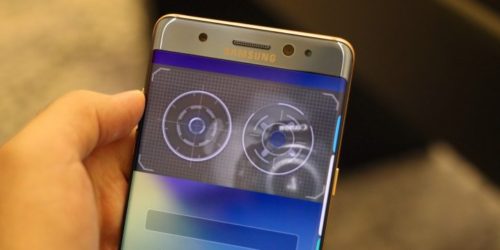
So iris scanner or fingerprint scanner?
When putting these two technologies together, we can see that both iris scanner and fingerprint scanner are ideal for smartphone security. This is because everybody has their own biometric data. Some passwords can be found out, but fingerprint and eyeprint can’t! They are sometimes a little too much for common smartphones users but it’s better than nothing right?
If we give priority to the security, iris scanner is the better one because as mentioned above, eyeprint is very hard to copy. But when it comes to efficiency, fingerprint scanner is the better choice because all you need to do is tapping on the sensor of your phone. Smartphones with fingerprint reader are also more affordable. So, which one do you prefer?
You May Like
-
Sony Xperia Ultra Max Pro Specs: 200MP Cameras, 19100mAh Battery!
-
-
Nokia Joker 2026 Specs: 200MP Cameras, 9800mAh Battery!
-
Nokia Horizon 2026 Specs: 200MP Cameras, 12800mAh Battery!
-
Nokia Titan 2026 Specs: 16GB RAM, 9700mAh Battery!
-
Redmi Note 15 Series Goes Global With 200MP Cameras, 6580mAh Battery, Price!
What is Siri and how does it work?
I’m sure many Android users are jealous with iOs users because they are well supported by the personal assistant called Siri. Today we will show you how this personal assistant works!

Siri: The process of voice recognition and answering
First of all, Siri uses the Automatic speech recognition (ASR) to transcribe the speech of the owners into text. ASR technology is only capable of detecting short commands, dictations or questions. Mispronounced words also can’t be detected. Then, this assistant uses a natural language processing program to analyze the parts of speech, the phrases, the constituent parsing and dependency parsing of the text. The result comes out as something they call “parsed text”.
Secondly, Siri runs a question and intent analyzing program to study the parsed text, in order to detect user’s intentions, whether it’s a command, a question, or something else. Then, this assistant sends those data to the server in the cloud to find the solution. If the command can be handled locally in the device, the server will do nothing but recording the speech for further study. If external help is required to fulfill the command, the server will send those data to a 3rd-party website for better response.

Thirdly, when the answer is available, Siri will transform those data into written text in the same language as the input speech. After that, Siri runs text-to-speech technologies to transform the text into spoken language, which is the final result the user receives. It seems to be a complicated and long process for this assistant to finally come up with an answer. But in fact, these steps are quickly conducted and the answer often arrives after only a few seconds.
Siri: What’s next?
Currently, Siri is doing a very good job in assisting iPhone users. Billions of commands are fulfilled every week. This technology from Apple is no doubt the best personal assistant nowadays. According to many sources, this virtual assistant will be developed into a bigger system that can take control of the social media and smart devices.
You May Like
-
Sony Xperia Ultra Max Pro Specs: 200MP Cameras, 19100mAh Battery!
-
-
Nokia Joker 2026 Specs: 200MP Cameras, 9800mAh Battery!
-
Nokia Horizon 2026 Specs: 200MP Cameras, 12800mAh Battery!
-
Nokia Titan 2026 Specs: 16GB RAM, 9700mAh Battery!
-
Redmi Note 15 Series Goes Global With 200MP Cameras, 6580mAh Battery, Price!
Top smartphone 2016 comparison: BlackBerry DTEK50 vs zenfone 3 vs galaxy A5
BlackBerry DTEK50 vs Zenfone 3 vs Galaxy A5 are 3 of the most popular smartphones in the market of 2016. Since everyone is having concern about these top smartphone, let’s see how they are comparing to one another
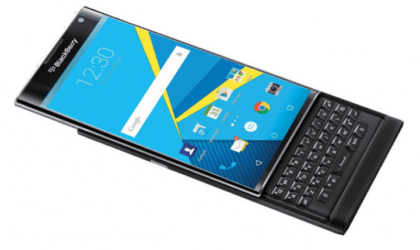
Top smartphone 2016: BlackBerry DTEK50 vs Zenfone 3 vs Galaxy A5!
BlackBerry DTEK50, Zenfone 3, and Galaxy A5 are three wonderful devices and all unique in their own way. For instances, BlackBerry-equipped DTEK50 with Android OS and proved it as the most Secure Android phone in the world. Meanwhile, Asus Zenfone 3 has the strongest performance among 4GB RAM smartphones to date. And Galaxy A5 is believed to be the most beautiful smartphone of its kind. However, to be trusted by users, they need more than just one signature to win over the harsh battle of mobile industry
Let’s take a look at the world’s most secure smartphone. BlackBerry has always been trusted for their security service. And this latest phone from the company brings users many secure functions to protect messages, calls, and personal information. Besides all those useful apps and software, the DTEK50 has a secure chipset to ensure ultimate safety. Other BlackBerry DTEK50 specs include a 2610 mAH battery, 3GB RAM, and 5.2-inch FullHD resolution and Android 6.0. 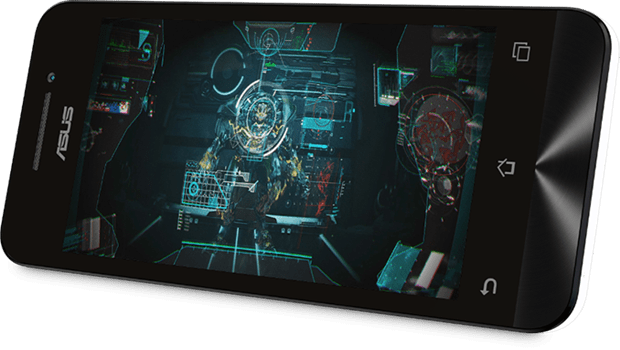
3 of the phones we are considering in this battle cost roughly $400, which is far from a budget price, but not too hefty for many users. Zenfone 3, with a decent 3GB RAM, a SND 625 chipset, and the reputation of Asus’s product quality, could be the strongest machine of this group. Other Asus Zenfone 3 specs include 64GB ROM, great 16MP/8MP camera duo, and 2650 mAH battery.
Top smartphone 2016 comparison: security, design or performance?
Last but not least, is the stunning mobile by Samsung – Galaxy A5. The winning point of this beast is its elegant, appealing design that can attract even the hardest customer. Although Galaxy A5 specs offer a smaller RAM of 2GB RAM, and smaller ROM of 16GB. Although Samsung Galaxy A5 cameras are just 13MP/5MP, it is still very trustworthy of the high image quality. Samsung Galaxy A5 also has a bigger battery of 2900 mAH. So, in conclusion, with the same USD 400 price tag, would you buy the security from BlackBerry, strong processor by Asus, or pretty design and great camera by Samsung?
You May Like
-
Sony Xperia Ultra Max Pro Specs: 200MP Cameras, 19100mAh Battery!
-
-
Nokia Joker 2026 Specs: 200MP Cameras, 9800mAh Battery!
-
Nokia Horizon 2026 Specs: 200MP Cameras, 12800mAh Battery!
-
Nokia Titan 2026 Specs: 16GB RAM, 9700mAh Battery!
-
Redmi Note 15 Series Goes Global With 200MP Cameras, 6580mAh Battery, Price!
4 of the best feature phones for under USD 100
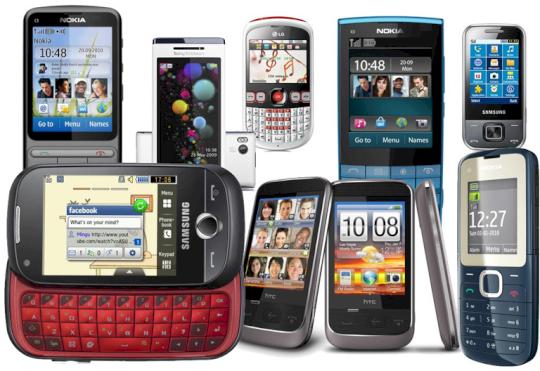
When all you need is calling, texting and some of the basic functions of a phone, feature phones are born for you. Since you will have lots of options, this best feature phones list will help you choose the one you need. Let’s go!
1. Lava A11: the most suitable to be on budget
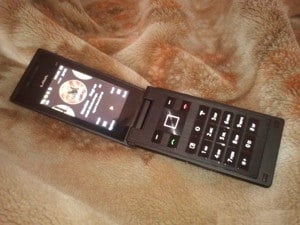
Lava A11 is the first phone on our list because it’s an on-budget phone. It is a combination of specs in one cheap phone. The Lava A11 battery is quite huge since it’s a Li-ion 1000 battery. Since feature phones do not require much battery and re-charge, it will last for days. Also, this device is a dual-sim phone. Therefore you can use 2 two numbers at the same time. You don’t have to throw away your own number when you want to buy a new phone.
The model of Lava A11 actually is really nice. It’s a flip design with a platinum colour cover. This metallic cover makes the appearance quite expensive. If people don’t know the price, they may think that you may have spent lots of money on it. The display is 2,8 inches with quite good resolution. Lava A11 also sports a 2MP camera. The best thing about this phone is the price. With only 2657 Rs (around 39,8 USD), you can buy it in any store.
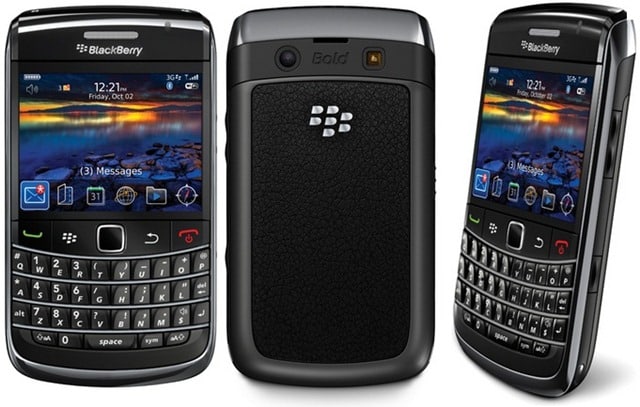
2. BlackBerry Bold 9700: mini computer
Even though BlackBerry brand is a grandpa in phones business, it doesn’t mean that BlackBerry phones out of fashion. On the contrary, it works so well and lasts much longer than other phones in the market. Take Blackberry Bold 9700 for example. It’s a combination between a mini computer and a phone. It has 1500 mAh battery under the hood. Its main camera is 3,15 MP and the display is 2,44 inches. It also sports a 0,5GB storage which can be expanded to 16GB. The price is just 2,999RS (around 45 USD).
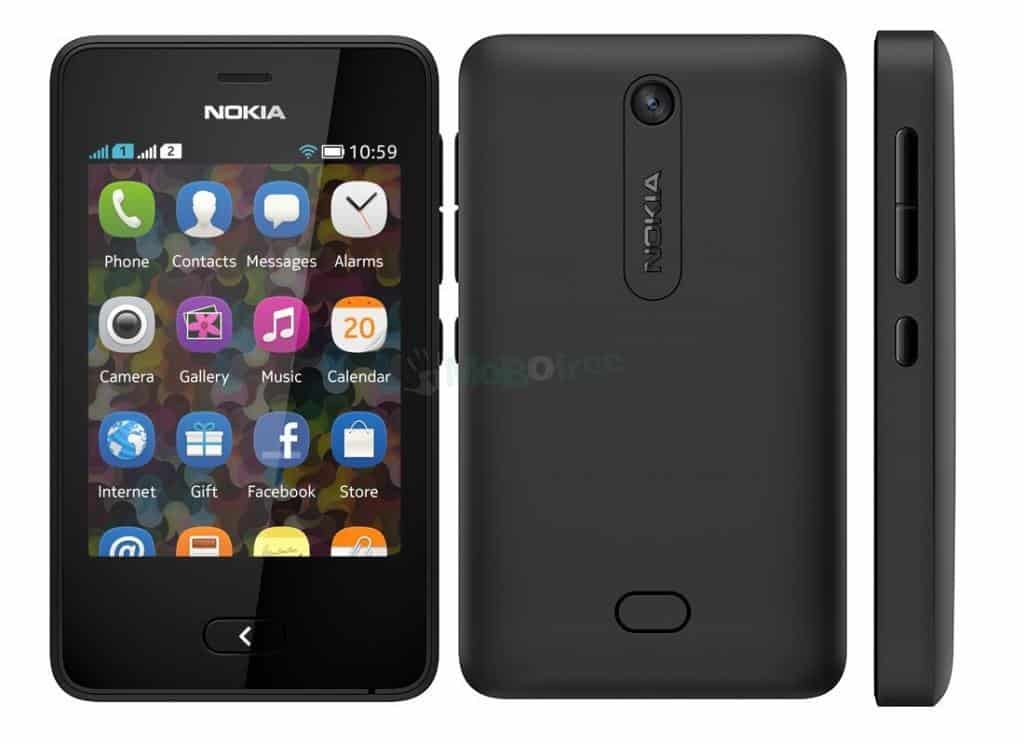
3. Nokia Asha 500: still alive
After Microsoft bought Nokia a few years ago, people thought that Nokia was dead. Actually, they still keep on manufacturing their old products. Nokia Asha 500 is one of those. It packs a Li-Ion1200 mAh battery. Running on Nokia Asha platform OS, the device works so well with its 0,5 RAM. The internal 32GB storage is huge for a feature phone. Besides, Asha camera is a feature standard 2MP cam. The price 2730Rs (about 51USD) is cheap for this device.
4. Alcatel 2012: defined quality
Alcatel 2012 can be considered as one of the best feature phones out there. It shares lots of features common with Lava A11. Firstly, it’s a flip and dual sim phone. Secondly, the device has a 2,8-inch screen and a metallic look. It also comes with many colors for you to choose from. The operation is quite good. The internal storage is about 8GB which can be extended to 8GB. The Li-Ion750 mAh battery is good enough. With these functions and the reasonable price at RS. 3499 (about USD52), there’s no need to think twice before buying this great phone.
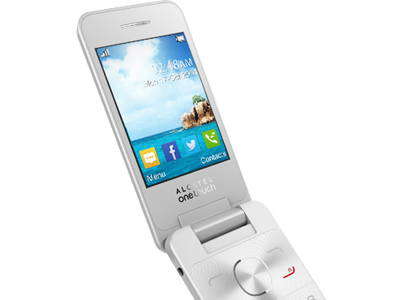
Best 4 feature phones with price under 100USD
Smartphones may rule the market right now but there’s no way they can wipe out all the feature phones. Since feature phones are so simple and not pricey. Plus, feature phones don’t use much battery and have small size designs. We expect that you will know which feature phone under $100 is for you.
You May Like
-
Sony Xperia Ultra Max Pro Specs: 200MP Cameras, 19100mAh Battery!
-
-
Nokia Joker 2026 Specs: 200MP Cameras, 9800mAh Battery!
-
Nokia Horizon 2026 Specs: 200MP Cameras, 12800mAh Battery!
-
Nokia Titan 2026 Specs: 16GB RAM, 9700mAh Battery!
-
Redmi Note 15 Series Goes Global With 200MP Cameras, 6580mAh Battery, Price!
Best Dual camera Phones in August: Take the best pictures with these 5
Dual camera is slowly but surely becoming a trend in new smartphones. Dual camera can help you take even better pictures. So, let’s have a look at the best dual camera phones for August!
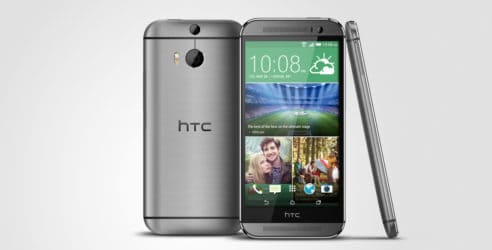
HTC One M8
First on the best dual camera phones list is HTC One M8. Released in March 2014, this phone sure took the spotlight when it was announced with the dual camera, making it one of the world’s first to have this cool feature. Dual camera can zoom better, and take better pictures. Simply put, it takes your photo-taking experience to a whole new level!
HTC One M8 features primary camera of dual 4MP, f/2.0, with latest technology at the time like geo-tagging, face/smile detection, etc. Secondary camera is 5MP, f/2.0. As for HTC One M8 specs, it sports a 5.0-inch Super LCD3 screen, to help capture moments in the best way. All operations are run by quad-core Snapdragon 801 processor, with the help of 2GB RAM. It has 16/32GB extendable storage. The battery has capacity of 2,600mAh. It runs on Android 4.4.2, and can be upgrade to 6.0. For this one phone, you need P11,680 ($250). It still remains one of the best dual camera phones.
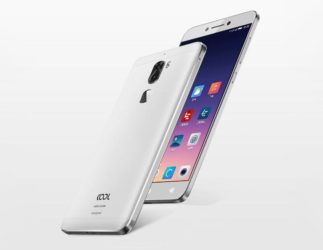
LeEco Cool 1
Next on the list of best dual camera phones is the rumored flagship smartphone with dual camera set up after LeEco acquired shares in Coolpad. The highlight obviously is the dual 13MP camera, with one sensor monochrome, and the other color. The main camera is accompanied by dual-tone flah and 4K video recording. There is also a 8MP fixed-focus snapper at the front. LeEco Cool 1 specs also include 5.5″ IPS display, 1080p resolution; octa-core Snapdragon 652 processor with 3 or 4GB RAM; 32/64GB storage, and 4,060mAh battery. It runs Android 6.0 skinned with LeEco’s eUI v5.6. Price starts from CNY 1,099 ($166).
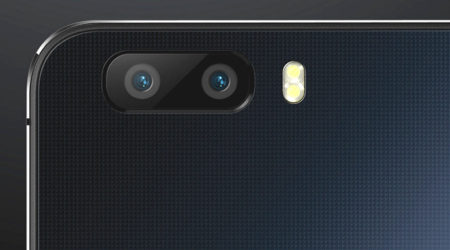
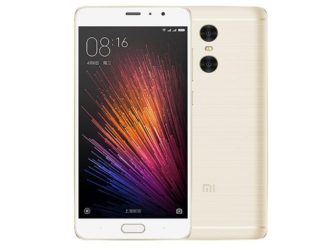
Xiaomi Redmi Pro
This is definitely the phone that will not be missed on this best dual camera phones list. This Xiaomi flagship features dual 13MP + 5MP camera as the main one, with phase detection auto-focus, and dual-LED flash. Secondary camera is 5MP. Other Xiao Redmi Pro specs include deca-core (ten!) Mediatek Helio X20 or X25 processor, with 3 to 4GB RAM, ensuring very high performance. There are 32, 64 or 128GB storage, all extendable, so plenty to save your pictures and videos. There’s a 5.5″ OLED screen, 1080p resolution, and big 4,050mAh battery. It runs on Android 6.0, and is available at Rs 9,990 ($149).
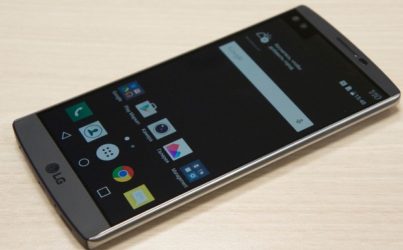
LG V20
This LG V20 created a lot of hype recently, and thus has earned a place in this list of best dual camera phones. It will feature a 20MP main camera (wow!), with laser auto-focus, OIS, and LED flash. You will enjoy shooting pictures with this phone. The front camera is the one with dual camera: dual 8MP selfie snapper! Your selfies will not look so broken now! As for other LG V20 specs, it has quad-core Snapdragon 820, with 4 to 6GB RAM, which makes it a beast in performance! There is 5.7″ screen, and a whooping 4,000mAh battery. It will run on Android 7, and is expected to cost about $650.
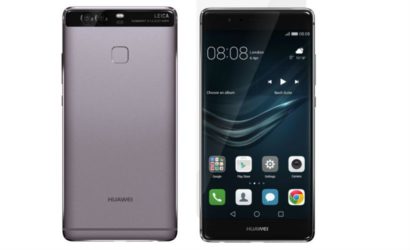
Huawei P9
When a phone has Leica optic lense in its camera, you know it’s going to be good for photography, and deserves to be on this list. Huawei P9 does not disappoint: dual 12MP with Leica optics for main camera, which will produce great pictures and video! The front shooter is also not bad, 8MP. Other Huawei P9 specs are: octa-core HiSilicaon Kirin 955, 3 to 4GB RAM, Android 6.0, 32/64GB extendable internal storage, and 3,000mAh battery. It will be available from P22,000 ($475).
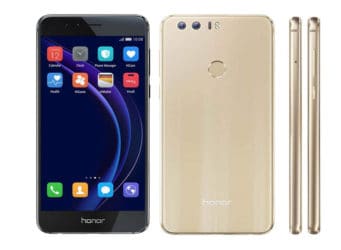
Huawei Honor 8
The last phone in this list has just been announced recently, Honor 8. Also from Huawei, this phone features dual 12MP camera at the back, with latest technology such as laser auto-focus, touch focus, face detection, etc. to enable taking great pictures, and record nice videos. The selfie shooter is 8MP. Some other nice Huawei Honor 8 specs: 5.2″ screen with 1080p resolution, octa-core HiSilicon Kirin 950 processor, 3-4GB RAM, 32-64GB storage (extendable), and 3,000mAh battery. It will run on Android 6.0.1 Marshmallow, and you can pre-order now for $350!
Those are the best dual camera phones to help capture all your precious moments and memories. Do you agree with our list? Tell us your thoughts!
You May Like
-
Sony Xperia Ultra Max Pro Specs: 200MP Cameras, 19100mAh Battery!
-
-
Nokia Joker 2026 Specs: 200MP Cameras, 9800mAh Battery!
-
Nokia Horizon 2026 Specs: 200MP Cameras, 12800mAh Battery!
-
Nokia Titan 2026 Specs: 16GB RAM, 9700mAh Battery!
-
Redmi Note 15 Series Goes Global With 200MP Cameras, 6580mAh Battery, Price!
3 signs dual camera smartphones is making a hit in 2016
Smartphones with dual camera setup is a new feature everyone is looking for when buying a new mobile. And up to now, we have spotted 3 signs such technology is going to dominate the market of 2016.
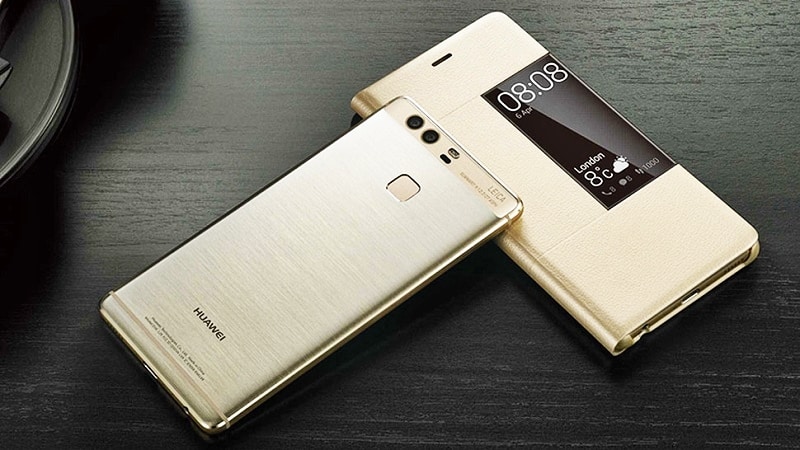
Dual camera smartphones: 3 sign it is a thing for 2016
Before we start, let’s wrap up about the advantages of dual camera compared to the original single one. The extra lens works as a backup function that helps receive more light from the same condition. Therefore, the images captured by these cameras will have better exposure and higher quality. Among those brands who are launching devices with this feature, Huawei is one of the first most popular names to be considered. The company has more than several camera smartphones that sport this newest technology.
The first sign to say Dual camera is becoming a trend in this year is that, users started to concern about the image quality. LG and Huawei have successfully renovated the way we know about smartphone camera. We read, hear, see, and experience how good this feature can be. Secondly, to our surprise, the latest camera smartphones didn’t show up as thick, heavy machines. Even with double the quantity of lens, they still look slim, elegant and premium on your hand.
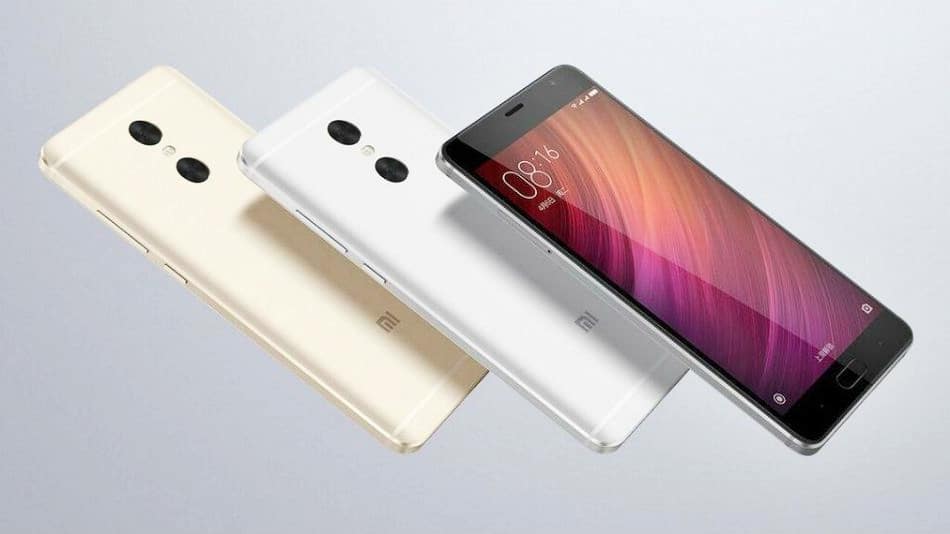
The third sign is that, more and more producers besides Huawei and LG are lining up to launch their future dual camera smartphones. We found Xiaomi, Oppo and so on joining the game. More interestingly, a recent report has just revealed that, Apple will also compete in this battle, with render designs of iPhone 7 packing dual shooting lens on its back.
Dual camera smartphones: the future is here
As we are approaching soon to IFA 2016, and as the shopping season is getting closer, many smartphone companies are gearing up to debut their upcoming flagships. With these 3 signs we spotted, it seems very likely that dual camera smartphones will get a huge bloom at the 3rd and last quarter of this year.
You May Like
-
Sony Xperia Ultra Max Pro Specs: 200MP Cameras, 19100mAh Battery!
-
-
Nokia Joker 2026 Specs: 200MP Cameras, 9800mAh Battery!
-
Nokia Horizon 2026 Specs: 200MP Cameras, 12800mAh Battery!
-
Nokia Titan 2026 Specs: 16GB RAM, 9700mAh Battery!
-
Redmi Note 15 Series Goes Global With 200MP Cameras, 6580mAh Battery, Price!
Which country has the fastest mobile network?
The Internet is very important for those who love travelling and playing Pokemon Go. So, which country has the fastest mobile network? Let’s find right now!
Which country has Fastest Mobile network?
OpenSignal is famous for mobile software and data researching. Recently, the firm has shown a list of the fastest national mobile networks. Unlike last year, the report considers the average speed of both 3G and 4G. This gives us a better look at which country offers the fastest mobile network. By collecting 822,556 users all over the world, OpenSignal shows how much time users spend on the Wifi network. If they spend more time on using Wifi, that means the 4G network isn’t good enough on mobile devices. By that way, the list is finalised as below.
First, South Korea lands at Number 1 on the list. This country offers 41Mbps speed and becomes the country having the fastest mobile network. Surprisingly, the next country is also from Asia. With 31Mbps, Singapore becomes the closest rival of South Korea. The next country on the list is Hungary with 26Mbps speed. The other countries in top 10 are presented in the pictures below. This result is trustful because it is calculated from typical customers.
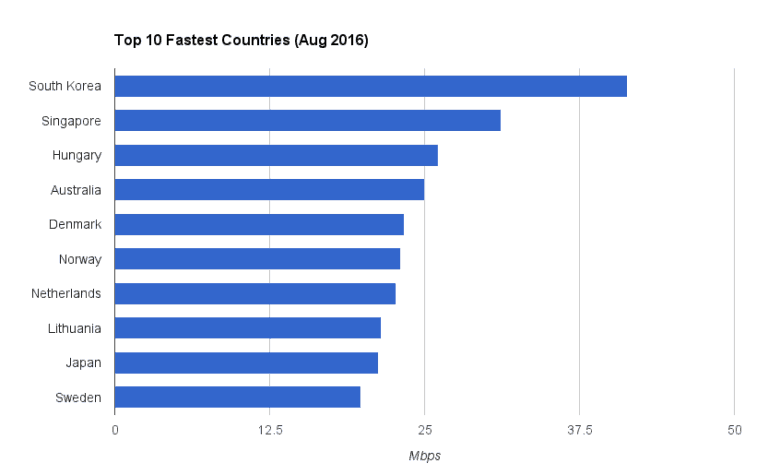
Meanwhile, the super-nations don’t land in top 10 of our list. For example, US bring users a 12.3Mbps of speed while the UK is slightly better with 13.7Mbps. China makes a little surprise with 18Mbps speed. Many Europe countries get results above 20Mbps. Finally, India causes a little disappointment when coming at only 5.3Mbps.
Fastest Mobile Network: A solution for India?
India doesn’t get the high result as the list showed. But we have a right to believe that India will have better Mobile speed in the future. The 4G network is more popular in this country. Especially, Nokia and Samsung are planing to launch 5G network in this nation. If the 5G network model comes true, India might have an amazing internet speed. Do you think India will become the fastest mobile network country in the near future?
You May Like
-
Sony Xperia Ultra Max Pro Specs: 200MP Cameras, 19100mAh Battery!
-
-
Nokia Joker 2026 Specs: 200MP Cameras, 9800mAh Battery!
-
Nokia Horizon 2026 Specs: 200MP Cameras, 12800mAh Battery!
-
Nokia Titan 2026 Specs: 16GB RAM, 9700mAh Battery!
-
Redmi Note 15 Series Goes Global With 200MP Cameras, 6580mAh Battery, Price!
Best phone cameras with ascending resolutions: from 12MP to 41MP
You are looking for a phone that can take photos and wondering which one is the best. Today, we bring the list of best phone cameras with ascending resolutions to you. Let’s take a look!
1. Samsung Galaxy S7 Edge (12MP)
Coming first on the list is Samsung Galaxy S7 Edge, which is Samsung’s most successful handset till now. The phone cameras are able to take great pictures even in low light conditions. The main camera is 12MP, with f/1.7, OIS, phase detection autofocus and LED flash. For selfie, there is a 5MP front snapper, with f/1.7 and auto HDR. S7 Edge sports a premium design with signature curved edge AMOLED screen covering a surface of 5.5-inch display with Quad HD resolution.
About other Samsung Galaxy S7 Edge specs, the phone has 4GB RAM, 32/64GB ROM expandable with microSD of up to 256GB, and an on-board liquid cooling system which prevents over-heating. There are 2 models of chipset: Quad-core (2×2.15GHz + 2×1.6GHz) Snapdragon 820 and Octa-core (4×2.3GHz + 4×1.6GHz) Exynos 8890. You also do not need to worry about quickly draining battery since it packs a 3600 mAh battery with fast charging. If you want to get your hand on this phone, the Samsung Galaxy S7 Edge price is at $769 (Rs.51,390).

2. Oppo F1 Plus (13MP)
Oppo F1 Plus is introduced as a selfie expert. The selfie camera has resolution of 16MP with f/2.0 and ISOCELL technology, which allow you to take the clearer selfies. Meanwhile, the main shooter comes with 13MP resolution, with f/2.2, phase detection autofocus, and LED flash. Oppo F1 Plus also flaunts a 5.5-inch display with Full HD resolution and Touch Access technology, which makes unlocking your phone much easier and faster in just 0.2s. Oppo F1 Plus specs are good too: 4GB RAM, 64GB ROM (+up to 256GB), Octa-core (4×2.0GHz + 4×1.0GHz) MediaTek Helio P10 processor and 2850 mAh battery. Oppo F1 Plus price is $408 (Rs. 27,300).

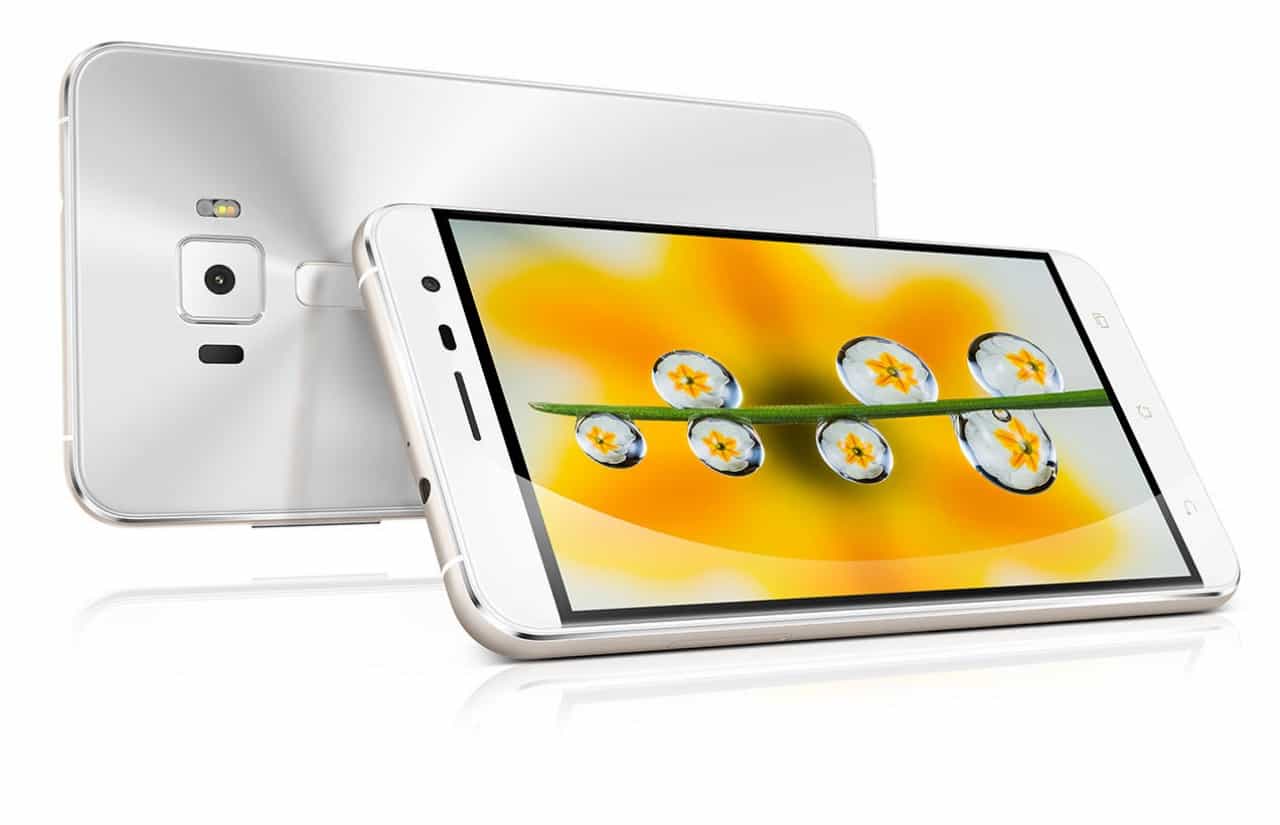
3. Asus Zenfone 3 (16MP)
Asus Zenfone 3 is the standard version of the triplet: Asus Zenfone 3, Zenfone 3 Ultra, Zenfone 3 Deluxe which were just released recently. The phone comes with a 5.5-inch IPS LCD display and a good combo of phone cameras: 16MP main shooter and 8MP front facing snapper. Under the hood there is a Snapdragon 625 SoC chipset along with 8 Cortex A53 core processor clocked at 2.0 GHz and an Adreno 506 GPU. Asus Zenfone 3 specs vary, with 4GB of RAM and 6GB RAM. The former is accompanied by 32GB ROM and the latter is alongside 64GB ROM. The Asus phone is fueled by a 3000 mAh battery. Asus Zenfone 3 price comes at $329 (Rs. 21,990).

4. BlackBerry Priv (18MP)
BlackBerry Priv is the first Android-based smartphone produced by BlackBerry. It runs with DTEK app, which warns you when your privacy is threatened so that this phone is introduced as a handset for security-concerned users. Different from other smartphones, this phone has a sliding QWERTY keyboard, which is one of a kind in addition to a 5.4-inch dual-curve Quad HD display. Other BlackBerry Priv specs include a hexa-core (4×1.4GHz + 2×1.8GHz) Snapdragon 808 processor, 3 GB of RAM, 32 GB of expandable internal memory (via microSD of up to 256GB), and a 3410 mAh battery. The phone cameras wise, there are a 18 MP rear shooter and a 2 MP front-facing snapper. BlackBerry Priv price is $784 (Rs.52,399).

5. HTC One M9 Plus (20MP)
Other than the Supreme Camera variant, HTC One also has the M9 Plus version. This one is more handy with 5.2-inch Quad HD display, with all metal body cover. The phone cameras are impressive with 20MP Duo Camera assembled with uFocus and HTC Eye Experience software for unique effects and easy editing tools. The secondary shooter only comes at 4MP, but by using UltraPixel software, it clicks great selfies in a wide variety of lighting conditions. A 3GB RAM, 32GB ROM, 2.2 GHz octa-core MediaTek Helio X10 processor and 2840 mAh power pack are some HTC One M9 Plus specs. HTC offers HTC One M9 Plus price at $821 (Rs. 54,833).
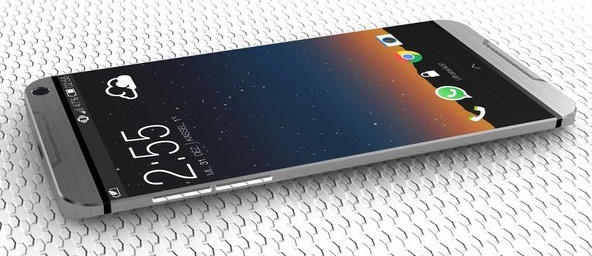
6. LeEco Le 2 Pro (21MP)
The LeEco Le 2 sibling comes with 5.5-inch 1920 x 1080 display, resulting in a density of 403ppi. Being the Pro version, LeEco Le 2 Pro specs are also premium. The phone cameras come with 21MP resolution for the main shooter and 8MP secondary snapper on the front for selfies. LeEco Le 2 Pro is much stronger than its brother with 4GB RAM, along with non-extendable 32GB ROM. It is one of the first generation smartphone that runs on deca-core (2×2.5GHz, 4×2.0GHz + 4×1.4GHz) MediaTek Helio X25 processor. All such features are powered by a 3000 mAh battery. LeEco Le 2 Pro price comes at $294 (Rs. 19,510).

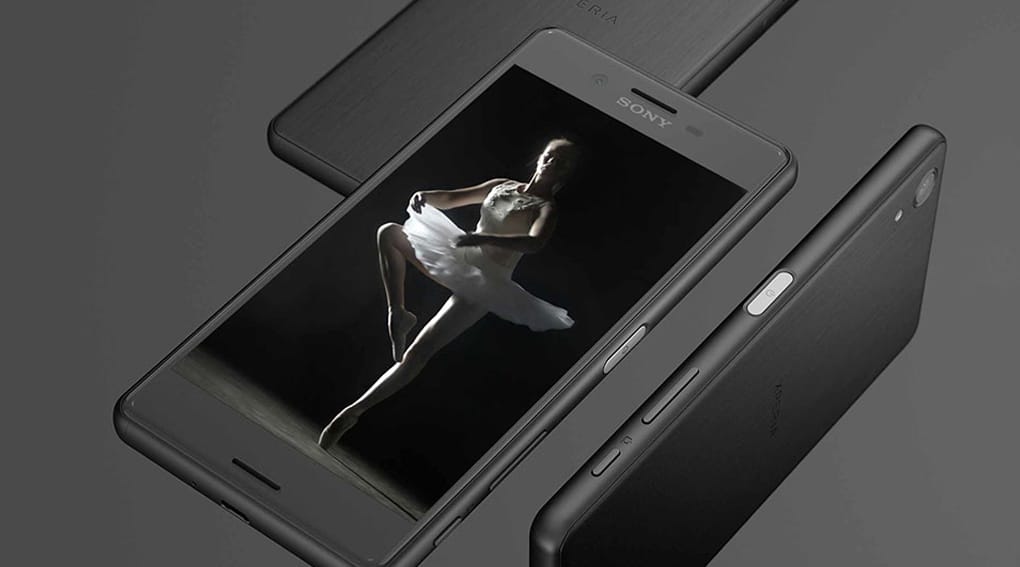
7. Sony Xperia X Performance (23MP)
Sony Xperia X Performance mounts a 23MP main camera which performs fast and accurately autofocuses in all circumstance thanks to the new Predictive Hybrid Autofocus feature. On the front, you can have great selfies experience with a 13MP shooter. Along with those are other Sony Xperia X Performance specs: it mounts 3GB RAM and 32/64GB ROM (+up to 256GB), coupled with 64 bit Quad-core (2×2.15GHz + 2×1.6GHz) Snapdragon 820 processor. The phone also comes with a 2700 mAh battery. It is available in White and Graphite Black. Sony Xperia X Performance price lands at $744 (Rs. 49,990).
8. Nokia Lumia 1020 (41MP)
Nokia Lumia’s cameras have always been impressive, but nothing comes close to Lumia 1020’s ones. It has a 41MP main camera with PureView technology and optical image stabilization tech to produce the best photos ever. That is Nokia’s last legacy – until the rumored comeback next year. On the front, there is a 1.2MP shooter above a 4.8-inch Full HD display. The phone runs on Snapdragon S4 Plus chipset and Dual-core 1.5 GHz processor. It also sports 2GB RAM along with 32/64GB ROM. 2000 mAh battery is used to fueled the highest resolution camera phone ever. The Nokia 1020 price comes at $450 (Rs. 30,185).

Best phone cameras with ascending resolutions
This is a list of devices that are so attractive with their camera and extra features along with them. Each phone is beautiful and strong on its own, thanks to its unique feature. Are they good enough for you? If you think any more phones should be on this list, share with us!
You May Like
-
Sony Xperia Ultra Max Pro Specs: 200MP Cameras, 19100mAh Battery!
-
-
Nokia Joker 2026 Specs: 200MP Cameras, 9800mAh Battery!
-
Nokia Horizon 2026 Specs: 200MP Cameras, 12800mAh Battery!
-
Nokia Titan 2026 Specs: 16GB RAM, 9700mAh Battery!
-
Redmi Note 15 Series Goes Global With 200MP Cameras, 6580mAh Battery, Price!


